

Battery-powered trains and locomotives are reshaping the face of public transit as commuter rail operators look to increase service while cutting back pollution and noise.
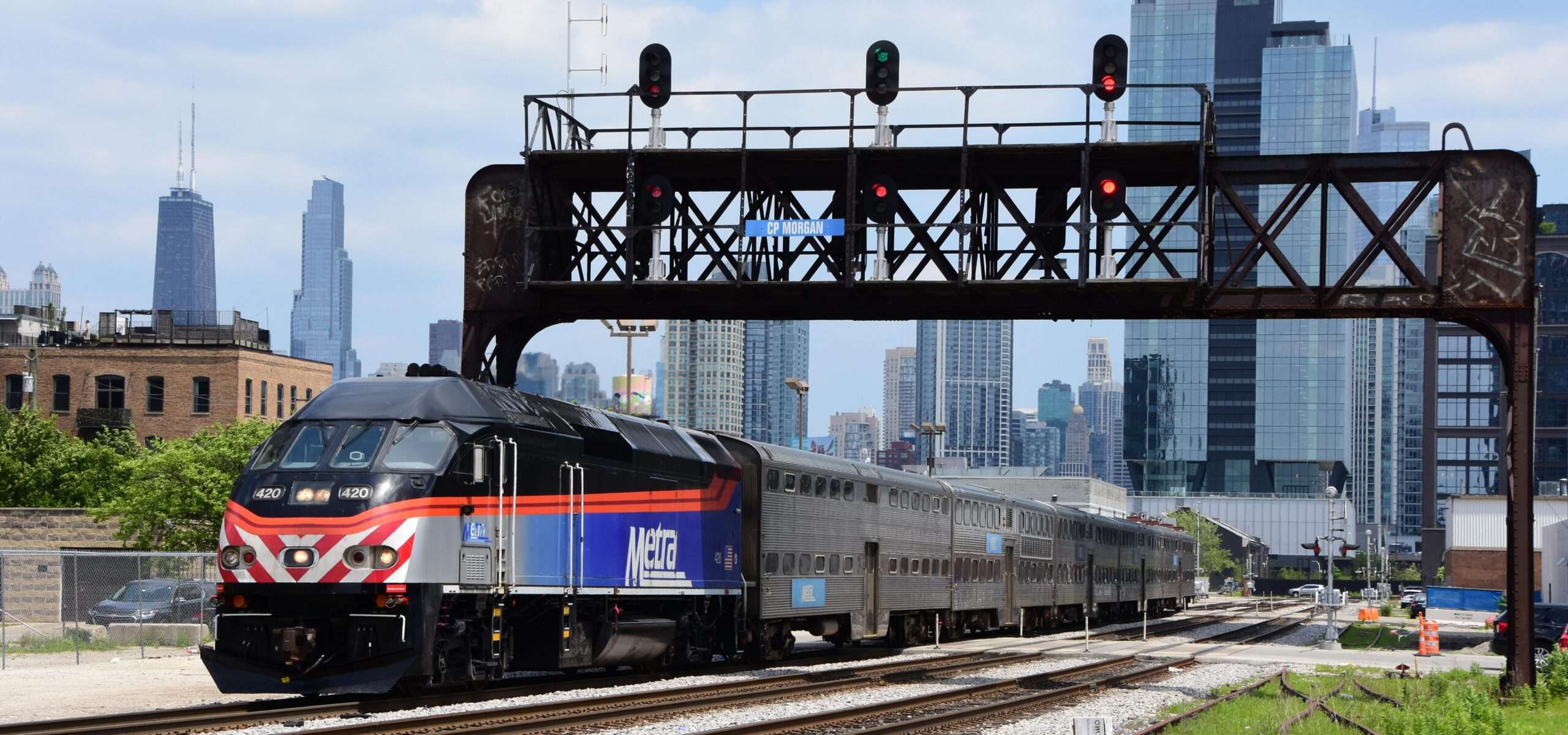
Metra – Chicago’s commuter rail system – stands among the latest authorities to embrace innovation in rail transit after unveiling the first battery-electric FLIRT train at the American Public Transportation Association (APTA) conference and expo. Rather than rely on full-scale corridor electrification, these trains incorporate on-board lithium-ion batteries to operate.
As a result, FLIRT trains can run on non-electrified rail corridors, broadening their utility without being forced to add infrastructure. The same sets can recharge or recover energy through multiple methods by using:
- Existing 480-volt cabling in yards and terminals.
- Dedicated charging infrastructure.
- Regenerative braking.
The trains will be capable of reaching speeds of up to 90 mph. However, for regular operations, Metra will restrict them to a maximum of 79 mph. Each on-board battery will have an approximately 50-mile range before needing a full recharge.
Metra has ordered eight battery-electric trainsets composed of four cars with a seating capacity of 200, breaking ground on its efforts to promote clean, safe and flexible passenger transportation options. The authority plans to deploy the sets along an inaugural 16.4-mile route between two stations on the Beverly Branch of the Rock Island Line. Metra anticipates that it will enter the trains in passenger service by 2028.
Chicago is not alone in its commitment to fostering a new generation of flexible, clean-energy powered rail transit solutions. Caltrain completed a $2.7 billion electrification project along the San Francisco Bay Area commuter railroad in 2024. The completed initiative replaced diesel-powered trains with electric alternatives and electrified 51 miles of track.
A year later, Caltrain saw a massive leap in ridership, rising from 6.2 million in Fiscal Year 2024 to 9.1 million in Fiscal Year 2025. Year over year, ridership increased by 47 percent, with weekend ridership alone doubling. Electrification allowed Caltrain to drastically enhance its operations by expanding service while reducing travel times. Not only do these solutions cover distances faster, but they also expand system capacity, offer new on-board amenities for passengers and provide quiet, pollution-free service.
Boston is on the verge of launching its own electrification pilot. The Massachusetts Bay Transportation Authority (MBTA), preceded by years of delays, plans to deploy a fleet of battery-powered train cars by the end of 2029. The project is part of a 15-year, $765 million agreement with the manufacturer to lease 28 train cars for the city’s 9.2-mile Fairmount Line.
Should the pilot be successful, MBTA anticipates implementing passenger service by 2030. Full implementation would take an enormous cut out of the authority’s fleet of 100 diesel locomotives. Not only will the initiative cater to the needs of underserved communities, the modern zero-emission trains would increase frequency while reducing the city’s overall carbon footprint.
The New York Metropolitan Transportation Authority (MTA) was among the first in the nation to delve into battery-electric train technology. In 2025, the authority ordered 13 battery-electric passenger locomotives for the Metro-North lines, with plans to incorporate them into service by 2029. Unlike the other models, these trains will be dual-mode, capable of using electric power from overhead wires and seamlessly switching to battery power as needed.
Photo courtesy of Metra
For more of the latest from the expansive government marketplace, check Government Market News daily for new stories, insights and profiles from public sector professionals. Check out our national contracting newsletter here.