

San Diego has broken ground on the first of four affordable housing projects intended for working professionals who are increasingly priced out of the communities they serve.
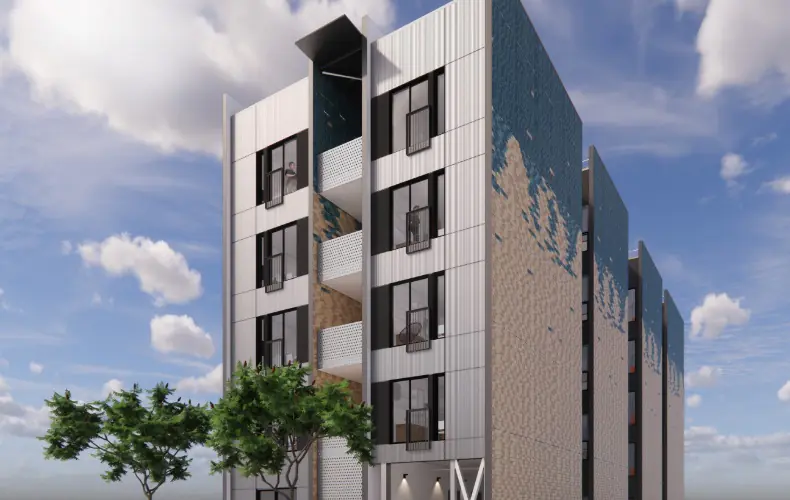
A new $100 million partnership among the San Diego Foundation, Bear Creek Fund Advisors and developer Naturally Affordable Housing will finance 257 apartments across four projects in North Park and Normal Heights. The first development will add 38 studio apartments on Louisiana Street in North Park. The developer expects Kansas Street II to break ground this year, while construction dates have not been announced for Oregon Street or Kansas Street III.
San Diego Foundation leads the partnership’s broader housing strategy and financing, while Naturally Affordable Housing develops the individual projects. The effort targets workers who earn too much for deeply subsidized housing but struggle to afford new apartments near their jobs. The foundation identifies housing as a regional priority, noting that 38 percent of San Diegans spend more than 30 percent of their income on it.
Federal housing measures generally classify households as “cost-burdened” when they spend more than 30 percent of their income on housing. At the projected rent of $2,100 a month, a household would need about $84,000 a year for rent alone to remain below that threshold. The income ceiling for a one-person household at 80 percent of San Diego’s area median income is $97,950.
Bear Creek is providing senior construction financing through a tax-exempt bond structure, according to information San Diego Foundation provided to Government Market News. The foundation will contribute equity alongside the bond proceeds to cover the developments’ overall costs. The structure is intended to provide a faster and more predictable path from project approval to construction.
The partners have not said the developments will be cheaper to build or released projected per-unit savings. Tax-exempt financing may reduce borrowing costs, but the partnership’s stated objective is to accelerate financing rather than promise lower construction costs. In this case, “affordable” describes the apartments’ income and rent restrictions, not necessarily the cost of developing them.
The $100 million is a construction-financing facility for the entire four-project State Streets Portfolio, rather than a grant or the cost of the Louisiana Street development alone. The portfolio consists of Louisiana Street, Kansas Street II, Oregon Street and Kansas Street III. San Diego Foundation said the facility is structured to support construction of all four projects.
Affordable housing developments can spend years competing for limited tax credits and other government subsidies before construction begins. The State Streets projects may still use applicable local incentives, approvals or other programs, but their central financing does not depend on securing a traditional competitive subsidy award. The partnership instead combines private construction debt with foundation capital without waiting for the competitive funding cycles associated with Low-Income Housing Tax Credits.
All 38 Louisiana Street apartments will be studios reserved over the long term for households earning up to 80 percent of the area median income. The approximately 375-square-foot units are expected to rent for about $2,100 per month. The first residents could move in near the end of 2027 if construction remains on schedule.
Project leaders describe the apartments as workforce housing for teachers, health care workers, first responders and others who may be priced out of the communities they serve. Naturally Affordable Housing emphasizes smaller units in walkable locations near employment centers, public transportation and neighborhood services. Louisiana Street is less than a block from University Avenue and has a Walk Score of 91, according to the developer.
City policies also helped make the projects possible. San Diego’s Complete Communities program offers expedited permitting, greater allowable density, development incentives and certain fee provisions for qualifying housing in transit-oriented areas. The financing partnership addresses the separate challenge of securing the capital needed to turn an approved development into housing.
A separate project, Bridge Deck, is also in the works but is not covered by the $100 million Bear Creek financing. The development is planned for 346 workforce apartments, including studios and one-bedroom units. It will be located near several Metropolitan Transit System rapid-transit lines.
The partnership is not San Diego Foundation’s first housing investment, but it adds another financing model to its regional strategy. The foundation has also partnered with the San Diego Association of Governments to invest $14 million in state Regional Early Action Planning funds supporting 966 affordable homes in development. Its related San Diego Housing Fund, announced in 2023, deploys private and institutional capital for workforce and middle-income housing.
San Diego Foundation has set a broader goal of helping 1,000 households annually for 10 years secure or maintain stable, affordable housing. The foundation told Government Market News that the goal includes more than newly constructed units, encompassing housing preservation and other programs intended to improve affordability, access and stability. Its housing efforts have supported the creation or preservation of 1,850 affordable and workforce units across the San Diego region to date.
Photo courtesy of the San Diego Foundation
For more of the latest from the expansive government marketplace, check Government Market News daily for new stories, insights and profiles from public sector professionals. Check out our national contracting newsletter here.