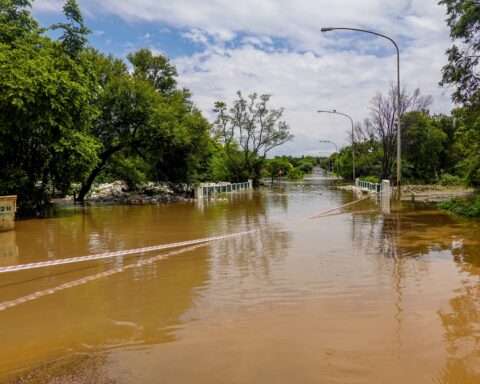



Hurricane Helene struck more than two years ago, but the federal government is still allocating hundreds of millions of dollars to rebuild damaged roads and bridges. A new highway disaster relief package pairs that continuing recovery with repairs from more recent flooding, illustrating how transportation reimbursements can arrive long after storms have passed.
The U.S. Department of Transportation (USDOT) announced more than $1.6 billion Oct. 19 for 34 states, the District of Columbia and five U.S. territories. The package follows a $1.86 billion nationwide allocation in June. Together, those rounds exceed $3.4 billion, while the Federal Highway Administration (FHWA) has also announced smaller emergency releases for individual disasters this year.
Allocations highlighted in this round include:
- North Carolina: $873 million for Hurricane Helene recovery, where the September 2024 storm caused damage at more than 9,000 sites and over 1,400 road closures in the western part of the state.
- Hawaii: $81 million for severe flooding associated with a series of Kona Low storms in March.
- Texas: $52 million for heavy rainfall damage and bridge washouts, including the crossing connecting Lago Vista and Marble Falls.
Federal funding sometimes follows completed construction. The Texas allocation comes more than a year after flooding washed out the Cow Creek bridge on RM 1431 between Lago Vista and Marble Falls. Under a $4 million emergency contract awarded to Hunter Industries, crews built a taller, wider replacement that reopened in August 2025, a month after the flood.
October’s announcement is smaller than June’s but continues a succession of large funding rounds. FHWA described a roughly $1.4 billion allocation in December 2021 as its largest emergency relief award since 2011. Packages announced in May 2025, June and this month have exceeded that amount.
Individual rounds frequently cover damage over several years. The September 2024 allocation included continued repairs following Hurricanes Ian and Fiona in 2022, Vermont flooding in 2023 and California atmospheric river events spanning 2022 through 2024.
Helene remains a major driver of commitments. June’s package included more than $908 million for hurricane repairs across affected states. North Carolina also received $1.15 billion for Helene recovery in September 2025, which USDOT identified as the largest single allocation to a state in the Emergency Relief Program’s history.
Alongside those commitments, FHWA provides initial assistance for newer disasters. This year’s announcements included $26 million for Indiana flooding in August and $5 million for Hawaii’s Kona Low storm damage in September.
The program’s regular authorization provides $100 million annually, with Congress supplying additional money through supplemental appropriations. FHWA’s Fiscal 2026 budget justification reported average annual allocations of $2.2 billion over the preceding seven years.
Appropriation timing affects when requests can be funded. In January 2025, FHWA announced $229.9 million for requests it could not fully fund the previous September because of limited resources. Disaster legislation enacted in December 2024 supplied the money.
A longstanding quick-release process provides initial allocations using preliminary damage information, with additional funding following detailed assessments. Agencies can begin urgent repairs before the formal funding process is completed. An allocation may therefore reimburse completed work or support continuing reconstruction.
The 2021 infrastructure law changed reimbursement and project eligibility. It extended the window for qualifying emergency repairs to receive 100 percent federal funding from 180 to 270 days after a disaster, with site-specific extensions possible when agencies cannot access damaged facilities to evaluate repairs.
The law also expanded eligibility for economically justified protective improvements, including raising roads or relocating them away from flood- and landslide-prone areas.
Further changes remain under consideration. USDOT’s regulatory agenda targets December for a proposed Emergency Relief rule addressing efficiency, resilience and evaluations of repeatedly damaged facilities. The latest package follows existing procedures for disaster-specific allocations, project approvals and reimbursement.
Photo by Yevgen Buzuk from Pexels
For more of the latest from the expansive government marketplace, check Government Market News daily for new stories, insights and profiles from public sector professionals. Check out our national contracting newsletter here.