

The Illinois General Assembly has officially passed the state’s $55.9 billion Fiscal Year 2027 budget, sending it to the governor’s desk for signing. The governor’s approval will mark the eighth consecutive year of balanced budgets making their way through the state’s governing bodies.
The budget encompasses the state’s efforts to promote accessibility and affordability for all state residents. Priorities include a bevy of appropriations to supplement housing, education and healthcare initiatives and programs across the state.
Some of the largest investments will directly benefit the state’s education systems, including nearly $1 billion to ensure students have access to the schooling they need to succeed. The budget includes $721.6 million to maintain the Monetary Award Program (MAP) funding level – a $320 million increase since 2019. Another $350 million will support the Evidence-Based Funding (EBF) Formula for K-12 education, bringing total funding for the program to $9.2 billion.
As part of the Illinois administration’s efforts to make everyday costs more affordable, the budget allocates roughly $100 million to help families afford groceries and food. The appropriations include:
- $70 million for the Families Receiving Emergency Support for Hunger (FRESH) Program. This program provides one-time payments of $400 to support families that have lost their SNAP benefits.
- $17.5 million for free breakfast and lunch programs in school districts.
- $12 million for the Illinois Grocery Initiative, providing relief and accessible healthy, fresh foods in food deserts.
Additional measures centered around making things more affordable for families include pausing the motor fuel tax for six months and implementing a back-to-school sales tax holiday from August 7 to 16, 2026.
As housing becomes increasingly unaffordable for families, Illinois’ budget dedicates $250 million for housing programs at the Illinois Housing Development Authority (IHDA) and Department of Commerce and Economic Opportunity (DCEO).
- $100 million will go toward a new Missing Middle Housing Infrastructure (M2I) Grant Program at DCEO. This initiative will connect developers with the funding needed to build affordable homes.
- $100 million for missing middle and other affordable housing programs at IHDA.
- $50 million for Opening Doors and SmartBuy down payment assistance programs at IHDA.
The state will provide additional medical debt relief, culminating in a $5 million appropriation for the Medical Debt Relief Pilot Program Fund. To date, the program – alongside other state efforts – has erased more than $1 billion in debt.
Other pieces of legislation passed alongside the budget package to help reduce costs include:
- Banning hidden and deceptive fees to ensure upfront pricing for consumers.
- Amplifying transparency and accountability in insurance rate setting to protect consumers from unfair or unjustified premium increases.
- Educating students on predatory and high-cost private students and providing insight into available federal financial aid options.
In addition to major funding for everyday residents, the budget introduced several new taxes on prediction markets, cryptocurrency and fantasy sports. Other revenue sources will be rerouted to the state’s general fund instead of capital projects.
Notably, the budget was passed without a vote on a highly anticipated measure to retain the state’s resident NFL football team – the Chicago Bears. The team has recently turned its attention to moving to Hammond, Indiana, which would result in the loss of a significant revenue driver for Illinois.
Despite the Senate voting to allow municipalities to establish local public stadium authorities that could directly negotiate with teams, the House didn’t take a vote on the measure before passing the budget. With the General Assembly no longer in session, any further movement on the article will have to wait until November unless Gov. JB Pritzker calls for a special session in the summer.
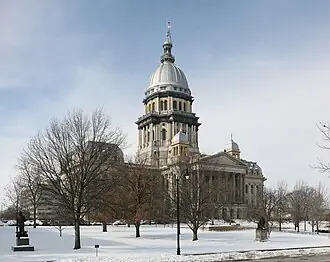
Photo by Daniel Schwen from Wikimedia Commons
For more of the latest from the expansive government marketplace, check Government Market News daily for new stories, insights and profiles from public sector professionals. Check out our national contracting newsletter here.