

Wisconsin Gov. Tony Evers announced earlier this month that his administration has adopted a new Clean Fleet Policy, requiring state agencies to choose alternative fuel vehicles (AFVs) when they replace or add to their fleet.
The changes are set to begin with model year 2027 vehicles, unless the purchase qualifies for an approved exemption. The Office of Sustainability and Clean Energy (OSCE) developed the policy with input from fleet managers across state agencies.
The policy covers the state’s lighter vehicle classes, which account for the large majority of Wisconsin’s fleet of about 6,000 vehicles. About 14% of the fleet currently runs on alternative fuels, according to the governor’s office. Under the policy, agencies will default to buying an AFV unless they can point to one of six approved reasons and explain in writing why a conventional vehicle is required.
State statute gives agencies several options to choose from, including fully electric vehicles, plug-in hybrids, standard hybrids, ethanol-capable vehicles, compressed natural gas and propane vehicles. The State Bureau of Procurement will handle the new requirement through its existing purchasing process, where a review committee will check requests before they advance, according to the policy.
The state buys vehicles on a yearly cycle that begins in early summer, when procurement staff notify agencies it is time to identify which vehicles need replacing. Agencies submit their requests, the State Bureau of Procurement reviews them and the governor gives final approval before agencies order from state contracts.
The federal Energy Policy Act (EPAct) already requires that 75% of the light-duty vehicles the state buys each year be AFVs. Wisconsin has met that standard, but according to the policy, it has increasingly done so by drawing on credits it earned in years when it bought more alternative fuel vehicles than were required.
Those banked credits will not last indefinitely. The policy warns that continuing to rely on them risks putting the state out of compliance and facing financial penalties. The new requirement is designed to rebuild that cushion and keep the state ahead of the federal standard.
The policy also notes that the eligible fuel types differ considerably in how much they cut emissions, with fully electric vehicles at the top of the range and propane and natural gas at the bottom. It cites federal Department of Energy (DOE) analysis and cautions that the benefit from electric vehicles ultimately depends on how the state’s electricity is generated.
Long-term cost plays a central role in how agencies will make these decisions. Rather than comparing sticker prices, the policy directs agencies to weigh what a vehicle will cost over its full life and points them to a procurement analysis tool for running that comparison. An agency can claim a cost exemption only when that longer-term math favors a conventional vehicle.
Agencies will see the change first reflected in updated vehicle request forms, which will ask them to document any exemption they claim. Requests that don’t meet the standard move to the Department of Administration secretary’s office for further review.
Agencies buy vehicles from contracts which the state awards on a two-year cycle. The State Bureau of Procurement solicits bids, awards the contracts and publishes them on the state’s online purchasing portal. Agencies then order from those contracts during their annual purchase window, meaning a single contract term covers two buying cycles.
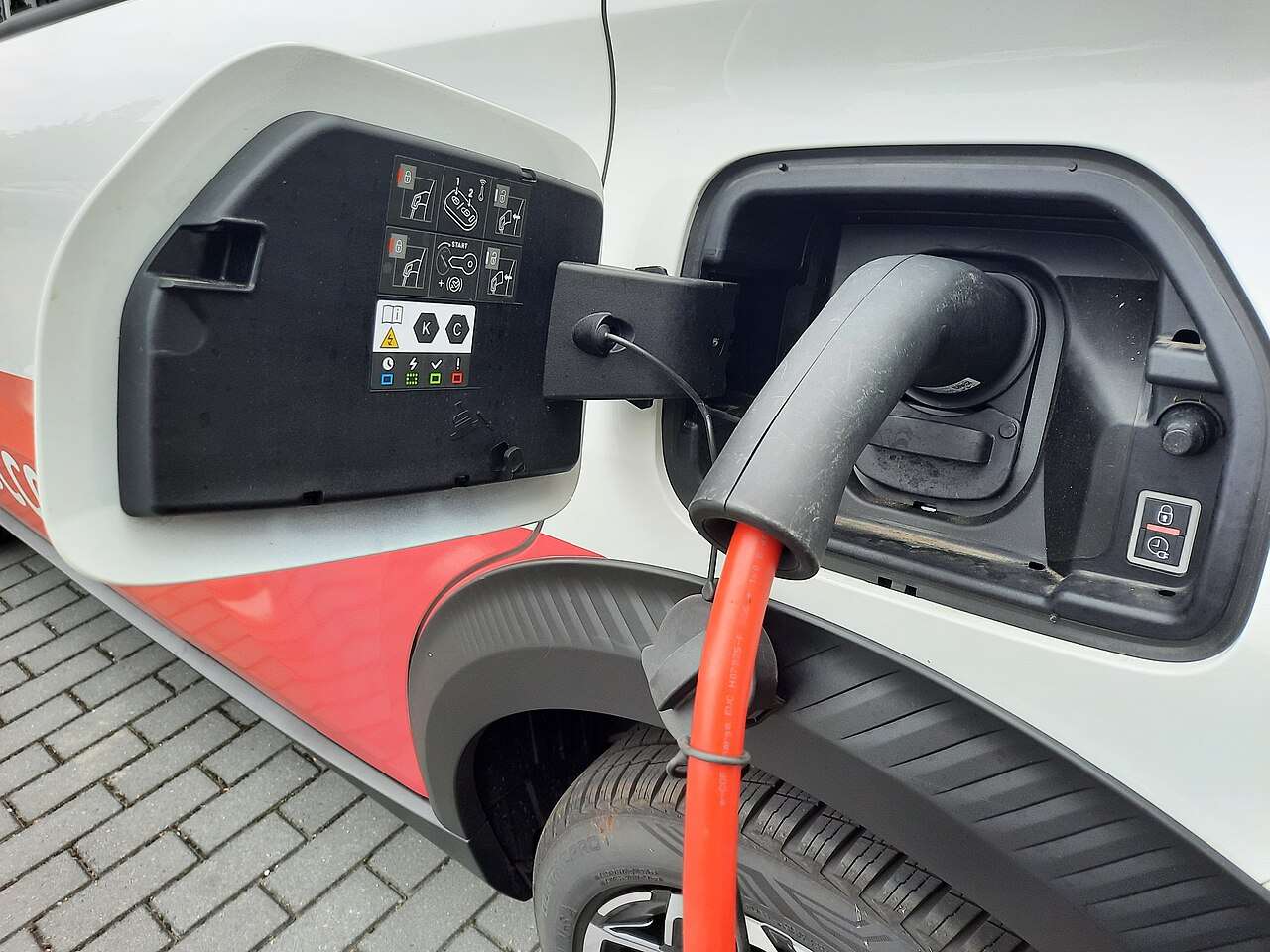
Photo by Ciell, CC BY 4.0 https://creativecommons.org/licenses/by/4.0, from Wikimedia Commons
For more of the latest from the expansive government marketplace, check Government Market News daily for new stories, insights and profiles from public sector professionals. Check out our national contracting newsletter here.