

Washington has activated a new tax credit for sustainable aviation fuel producers after reaching a statewide production capacity threshold of 20 million gallons annually, Gov. Bob Ferguson announced.
The incentive provides tax credits ranging from $1 to $2 per gallon for qualifying sustainable aviation fuel, creating additional financial support for companies developing production facilities and alternative jet fuel technologies in the state.
The Washington Department of Ecology confirmed that the state’s sustainable aviation fuel industry recently achieved the production capacity required to activate the credit.
Under the program, producers can receive $1 per gallon for aviation fuel that generates at least 50 percent fewer greenhouse gas emissions than conventional jet fuel. Fuels with greater emissions reductions can qualify for credits of up to $2 per gallon.
The incentive is intended to encourage investment in domestic aviation fuel production while helping manufacturers address the higher costs associated with producing lower-carbon alternatives.
Sustainable aviation fuel, commonly known as SAF, can be produced from agricultural materials, waste products and synthetic feedstocks. The fuels are designed to reduce lifecycle greenhouse gas emissions compared with conventional petroleum-based jet fuel.
The tax credit adds to a series of state investments supporting sustainable aviation fuel research, manufacturing and infrastructure development.
Washington has provided funding to support SkyNRG’s planned production facility in Walla Walla and sustainable aviation fuel research at Washington State University.
The state also helped establish the Cascadia Sustainable Aviation Accelerator, an initiative focused on research, infrastructure access, financing and partnerships intended to accelerate commercial production.
Jake Gentry, executive director of the accelerator, said the new incentive could help narrow the cost difference between sustainable aviation fuel and conventional jet fuel.
Several companies have begun developing sustainable aviation fuel manufacturing operations in Washington.
In June, Ferguson participated in the opening of a production facility operated by Twelve in Moses Lake.
The facility uses carbon dioxide, water and electricity to manufacture synthetic aviation fuel, representing an alternative to production methods that rely on agricultural or waste-based feedstocks.
The state is seeking to attract additional manufacturing investments as airlines and aerospace companies pursue lower-emission fuel alternatives.
Washington’s tax credit can be combined with other available incentives, including benefits under the state’s Clean Fuel Standard.
The Clean Fuel Standard allows qualifying transportation fuel producers to generate credits for supplying fuels with lower lifecycle greenhouse gas emissions.
Eligible producers may also participate in the federal Renewable Fuel Standard, which provides additional incentives for qualifying renewable fuels.
State officials said the combination of programs is intended to improve the financial competitiveness of sustainable aviation fuel production in Washington.
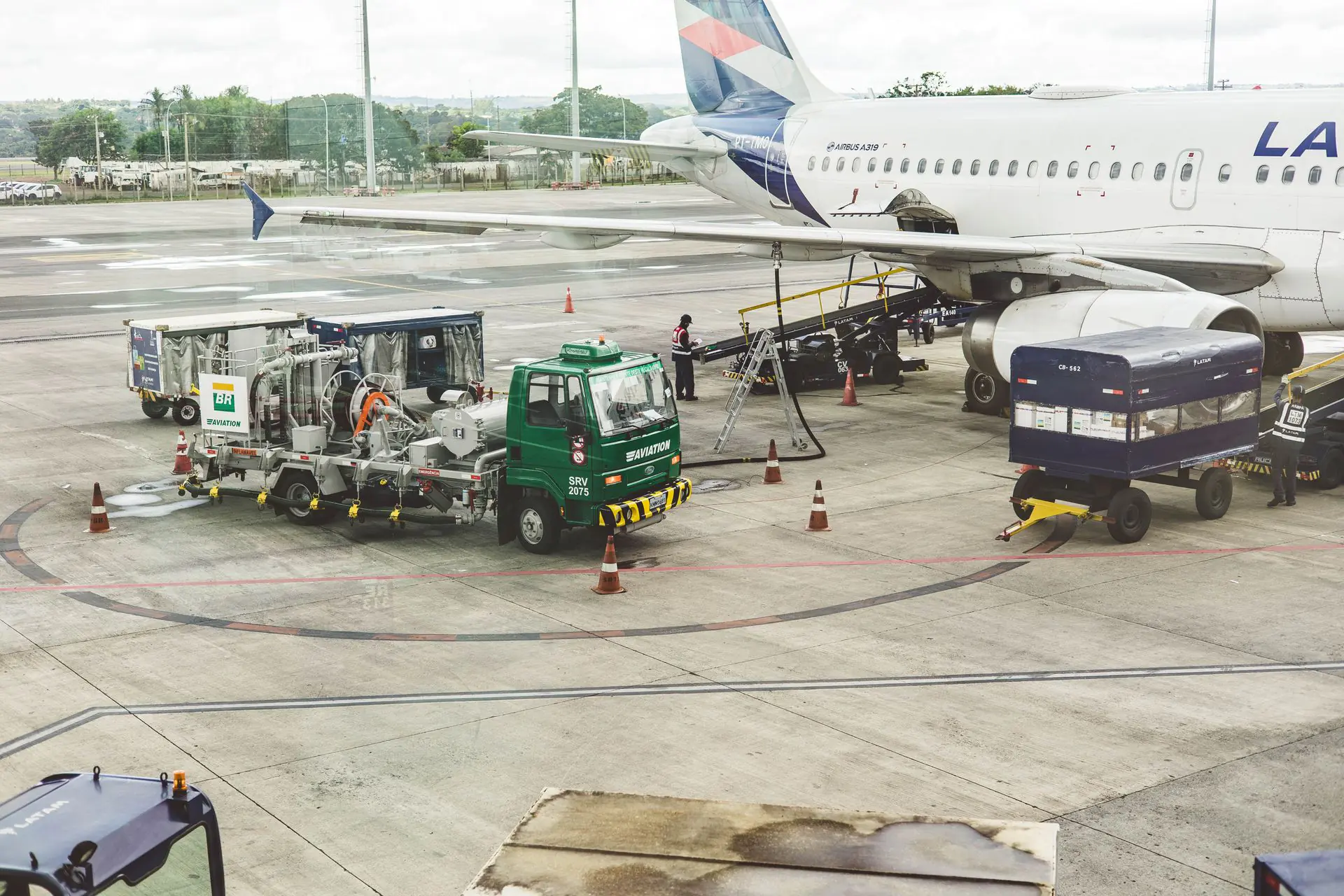
Photo by Rafael Rodrigues from Pexels
For more of the latest from the expansive government marketplace, check Government Market News daily for new stories, insights and profiles from public sector professionals. Check out our national contracting newsletter here.