

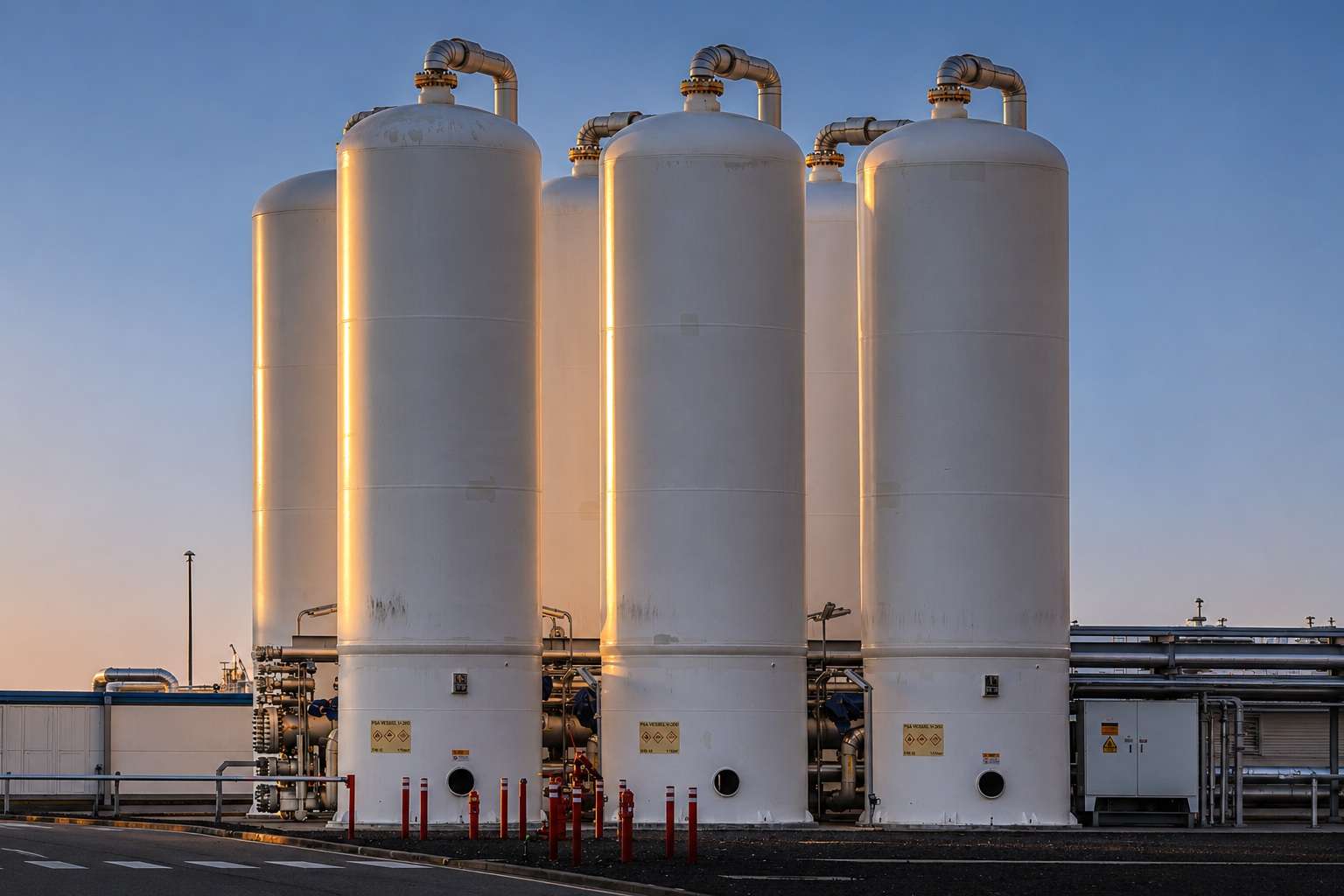
Federal regulators are proposing to overhaul safety rules for liquefied natural gas facilities, drawing in part on a 2022 explosion that shut down the Freeport LNG export terminal on the Texas Gulf Coast.
The Pipeline and Hazardous Materials Safety Administration (PHMSA) proposes to update equipment standards, give developers a new way to calculate safety buffers, and establish separate requirements for permanent small-scale plants. The proposal would also broaden incident reporting during startup and let certain operators tailor maintenance programs to the hazards at their sites. PHMSA estimates the changes would save the industry the equivalent of about $98 million a year.
The Freeport explosion occurred June 8, 2022, after liquefied natural gas trapped in a transfer pipe warmed and expanded while a pressure-relief valve was improperly isolated. The pipe ruptured and escaping vapor ignited, setting off an explosion and fire that shut down the terminal in Quintana. Federal regulators reported no injuries or deaths and began authorizing a phased restart in January 2023.
PHMSA cites the accident in proposing to write existing spill-modeling guidance into federal regulation. Under the proposed default siting rules, developers would model a spill from a one-inch hole in a pipe-in-pipe transfer system when calculating the safety buffer around a facility. The same proposal would make it easier to specify those systems under updated equipment standards.
Transportation Secretary Sean Duffy announced the proposal Oct. 28 in Houston, and PHMSA published it Nov. 3. The agency would adopt the 2026 edition of the National Fire Protection Association’s LNG standard, replacing the 2001 edition it relies on for most purposes. The proposal also addresses congressional directives issued in 2016 and 2020 on small-scale facilities and risk-based maintenance at certain larger plants.
Proposed safety changes
- Equipment and design. Developers would have a clearer path to use membrane storage tanks, certain single-wall containers, and pipe-in-pipe systems. Operators can currently need a special permit or a finding of equivalent safety to use newer designs.
- Siting and safety buffers. Developers could follow updated default rules or use a site-specific analysis that weighs the likelihood and consequences of accidents. PHMSA says the second option could give some operators more room to add capacity within an existing site.
- Small and temporary plants. Permanent small-scale facilities would get their own safety requirements. Mobile and temporary facilities would face more detailed standards and a default six-month limit, with options to extend that period.
- Operations and maintenance. Facilities under Federal Energy Regulatory Commission jurisdiction could choose a program tailored to their site’s hazards. Operators choosing that option would have to submit an implementation plan and timetable.
- Startup and incident reporting. The proposal would explicitly cover qualifying incidents and safety-related conditions during startup and extend reporting to hazardous fluids beyond LNG. It would also expand failure investigations and prescribe more detailed steps for clearing combustible material from pipes and equipment.
PHMSA cites a 2014 explosion at an LNG plant in Plymouth, Wash., in explaining the proposed changes to those procedures. Investigators found that a mixture of gas and air apparently remained in the piping after purging and ignited during startup. The explosion injured five workers and prompted evacuations within two miles of the plant.
Gulf Coast export growth
U.S. LNG exports date back decades. A terminal in Kenai, Alaska, began shipping LNG to Japan in 1969. The modern export industry in the Lower 48 began in February 2016, when the Sabine Pass terminal in Louisiana shipped its first cargo to Brazil.
Six terminals in Texas and Louisiana shipped about 5.12 trillion cubic feet in 2025, or roughly 93 percent of the U.S. total of 5.51 trillion cubic feet. Freeport and Corpus Christi together accounted for about 29 percent of the national total. Texas gained a third major export terminal this April, when Golden Pass began shipping LNG.
As of Sept. 22, 17 LNG export projects nationwide had federal approval, including new terminals and expansions. Eight were under construction and nine were awaiting a start. The four Texas projects under construction were Golden Pass, the Corpus Christi expansion, Port Arthur LNG and Rio Grande LNG. Two others, Freeport LNG’s fourth liquefaction unit and Texas LNG Brownsville, had federal approval and were awaiting construction, according to the Federal Energy Regulatory Commission.
Compliance and timing
Plants already operating or approved before the new requirements take effect would generally keep their existing siting, design, and construction standards. Replacements, relocations and significant alterations could trigger updated requirements. Developers could use the updated siting approach early, and compliance for projects subject to those standards would become mandatory five years after publication of a final rule.
Updated operating, maintenance and incident-reporting requirements would also apply to plants already in service. PHMSA counted 186 LNG facilities in service nationwide in 2025, including plants that store gas for periods of peak demand. The U.S. Energy Information Administration’s November outlook projects LNG exports will average 19 billion cubic feet per day in 2027, up from 15.1 billion in 2025.
PHMSA’s preliminary savings estimate uses a 3 percent discount rate to express projected savings as an annual figure. The agency could quantify only some of the proposal’s effects. The estimate excludes some new compliance costs and potential savings from newer equipment and more flexible siting.
Public comments are due Jan. 4, under docket PHMSA-2019-0091. The docket includes a preliminary regulatory impact analysis and a draft environmental impact statement. PHMSA plans to announce the date of a public advisory committee meeting in the Federal Register.
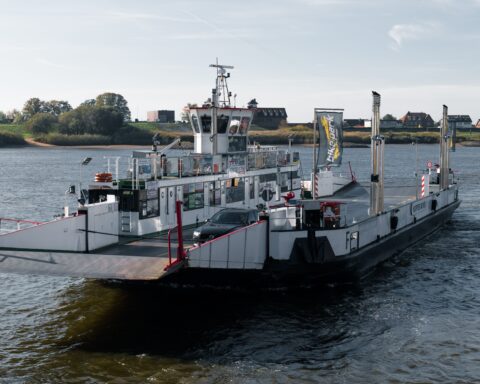
Photo by Igor Passchier from Pexels
For more of the latest from the expansive government marketplace, check Government Market News daily for new stories, insights and profiles from public sector professionals. Check out our national contracting newsletter here.