


Arizona water finance officials have approved a $4.9 million feasibility study of an industry proposal for a desalination plant and pipeline in Baja California that could free up a larger allocation of Colorado River water for the state.
If developed, the Northern Gulf of California Desalination Facility could provide Arizona with an estimated 167,000 acre-feet of water annually, or about 149 million gallons per day. An expansion of the plant, located in Mexico, could eventually increase that amount to 500,000 acre-feet, or about 446 million gallons per day.
Mexico has yet to sign onto the project. If it moves forward, the desalinated water would not be piped into Arizona. Instead, Mexico would use the new supply and, under an agreement that would have to be negotiated, reduce its reliance on Colorado River water. Arizona could then receive a corresponding amount through the existing river system.
The proposal was developed by private industry in response to a Water Infrastructure Finance Authority of Arizona (WIFA) solicitation, not by the Mexican government. WIFA issued the solicitation in November 2024 seeking private-sector teams capable of developing new, resilient and long-term water supplies for Arizona. The agency did not prescribe a specific project or technology.
Seventeen teams submitted qualifications. Six project proposals were subsequently submitted by three developer groups, including four from EPCOR Water Innovation Partners, one from the Acciona-Fengate Water Augmentation Alliance and one from ZARETAW LLC.
WIFA selected four of those proposals in November 2025 for more detailed appraisal. The Northern Gulf of California Desalination Facility was submitted by EPCOR Water Innovation Partners, with Sacyr Water USA LLC serving as lead developer.
WIFA’s board approved the first appraisal stage Sept. 16. Board member Theodore Cooke reported that the stage would cost $4.9 million and take approximately nine months.
The appraisal will examine whether the proposal is technically, legally, environmentally and financially feasible. It is not an authorization to construct the plant, commit Arizona to its full cost or enter into an exchange agreement with Mexico.
The study will compare two possible configurations in Baja California. One would involve a desalination plant near San Felipe on the Gulf of California and a pipeline carrying water north. The other would use a plant near Cerro Prieto. Both concepts are intended to provide water for use in Mexico near the Colorado River system.
The initial work will examine engineering requirements, expected water production, preliminary capital and operating costs, environmental and cultural impacts, Mexican permitting requirements, potential water purchasers, project ownership and financing structures, and risks to Arizona.
The initial cost projections will be Class 5 figures, the earliest and least precise category of construction estimate, prepared when less than 2 percent of a project has been defined. WIFA has not published an estimated construction price for the plant and pipeline.
California’s Carlsbad desalination plant cost about $1 billion to build and can produce up to 50 million gallons per day. The initial production contemplated by the Sacyr proposal would be nearly three times Carlsbad’s capacity, before accounting for the proposed pipeline and other supporting infrastructure.
WIFA’s full appraisal process could take 28 months. It is divided into a nine-month first stage, a 10-month second stage and a nine-month third stage. Work cannot proceed into the later stages without additional written authorization from WIFA.
Questions about Mexico’s participation will be central to the review. Mexico has not been identified as the project’s developer, owner or committed financing partner. Mexican permits, local support, water-use arrangements and a binational exchange agreement would all have to be secured before the project could proceed.
Arizona has several complementary water agencies and authorities with distinct responsibilities. The Arizona Department of Water Resources oversees water supplies, rights and statewide planning, while the Arizona Department of Environmental Quality regulates drinking-water quality and wastewater discharges.
WIFA’s role is primarily financial. It provides loans, grants and project-development funding for drinking-water and wastewater infrastructure, conservation efforts, rural water projects and potential new water supplies. The Legislature created WIFA’s Long-Term Water Augmentation Fund in 2022 to support investigations, imported-water projects, conveyance infrastructure and other supply-development efforts.
The Sacyr proposal is one of several private-sector concepts built around water exchanges rather than directly transporting new water into Arizona.
In August, WIFA approved an initial appraisal of EPCOR’s South Bay Potable Water Reuse proposal. That concept would treat wastewater collected in California for potable use in Mexico. In exchange for Arizona’s investment, the state could receive a portion of the Colorado River water that Mexico would no longer need.
WIFA has also advanced EPCOR’s California Groundwater Storage and Recovery proposal. It would store excess California runoff in underground aquifers during wet years. Arizona could receive a share of California’s Colorado River allocation in exchange for helping finance the storage project.
A fourth proposal, from the Acciona-Fengate Water Augmentation Alliance, combines Gulf of California desalination with binational conveyance infrastructure and an exchange involving Mexico’s Colorado River allocation. That proposal is expected to receive separate consideration from WIFA.
Interest in desalination is increasing as drought, population growth and pressure on traditional water sources lead western states to examine alternatives. Large seawater desalination projects remain relatively uncommon in the United States, however, because they require substantial capital, consume large amounts of energy and can face lengthy permitting reviews over their effects on marine life and the disposal of concentrated brine.
California’s Carlsbad facility demonstrates that a large project can be built and operated, but other proposals in the state have struggled. The California Coastal Commission rejected a proposed desalination plant in Huntington Beach in 2022 after raising environmental, financial and coastal-development concerns.
WIFA’s appraisal will determine whether the Northern Gulf proposal merits further development and negotiations. Even if all three appraisal stages are completed, construction would still depend on financing, Mexican and U.S. approvals, agreements among water users and a final decision by Arizona on whether the expected water supply justifies the cost and risk.
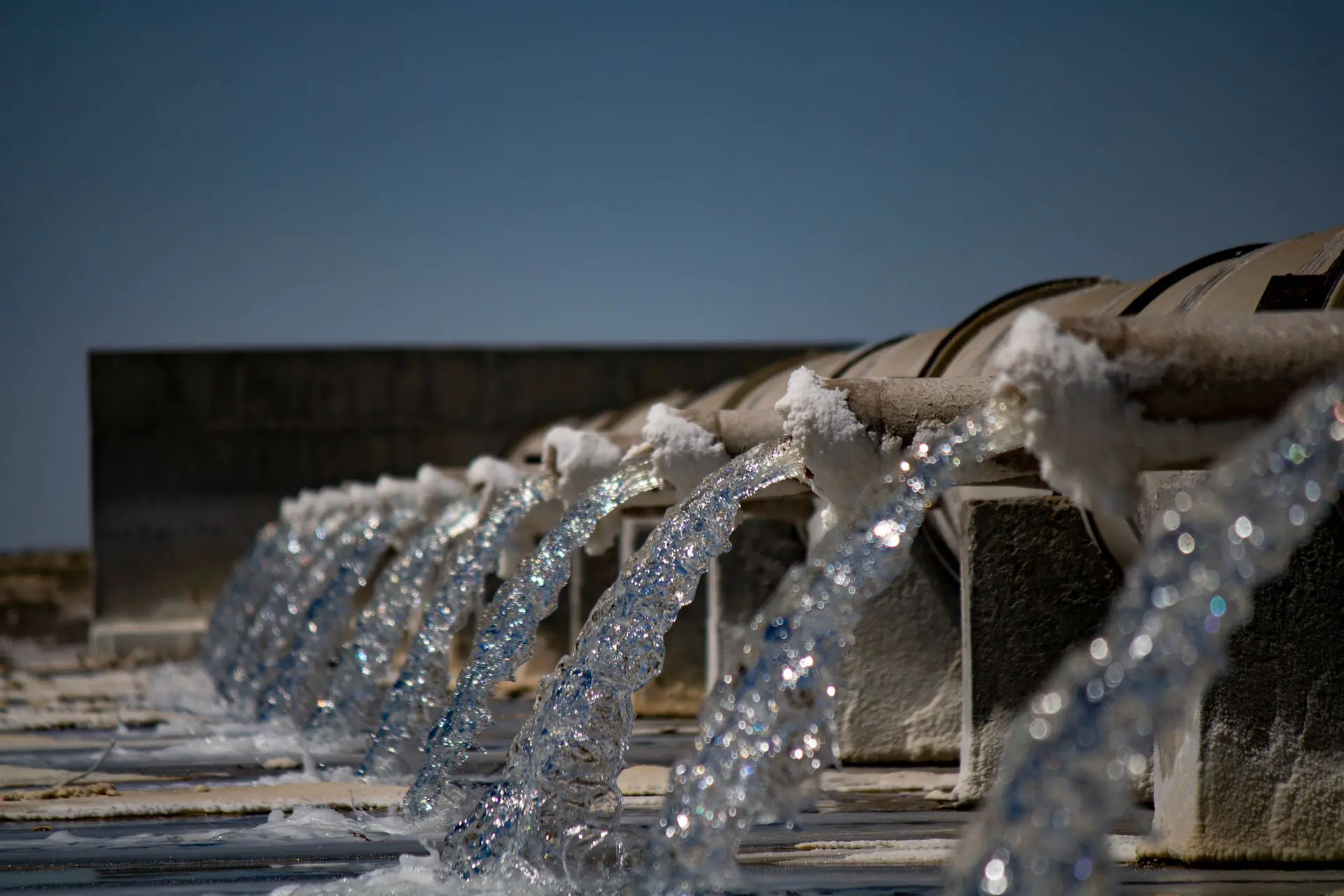
Photo by Orhan Akbaba from Pexels
For more of the latest from the expansive government marketplace, check Government Market News daily for new stories, insights and profiles from public sector professionals. Check out our national contracting newsletter here.