


The U.S. Department of Transportation recently announced America’s Great Corridors of Commerce, a proposal to let states and railroad owners lease existing highway and rail rights-of-way to utility companies through public-private partnerships.
DOT plans to initially designate up to five highway or rail corridors where states or railroad owners are willing to partner with utilities on transmission lines, fiber-optic cables, water pipelines and other infrastructure. Federal assistance would focus on technical support, permitting coordination and access to existing financing programs. DOT has not announced dedicated construction funding.
Before the program can move forward, the department is seeking public input on how the corridors should be selected and how the public-private partnerships should be structured. DOT says the program could speed construction of energy and telecommunications infrastructure, reduce development costs and generate new revenue for transportation improvements.
For Texans, the concept may sound familiar. Former Gov. Rick Perry’s Trans-Texas Corridor also envisioned combining highways, rail lines and utility infrastructure within shared corridors developed through long-term partnerships with private companies.
The Build America Bureau, which would oversee America’s Great Corridors of Commerce, was established within DOT in 2016 under the 2015 Fixing America’s Surface Transportation Act. It was created to speed up infrastructure projects by putting federal credit and grant programs, technical assistance and public-private partnership expertise under one umbrella.
Under the proposed model, a state transportation department or railroad would select a private concessionaire to serve as a “Corridor Manager,” typically under a 30- to 50-year agreement. The private company could design, finance, build, operate and maintain utility infrastructure within the transportation right-of-way while the state or railroad retained ownership and control of the land.
DOT’s Request for Information identifies an underground tunnel or conduit capable of carrying several types of infrastructure as one likely design. Above-ground or hybrid projects could also be considered.
The Corridor Manager would market the available space to electric, telecommunications, water or other utility companies, negotiate leases and collect annual payments. Revenue would be shared with the state or railroad according to the concession agreement and could be reinvested in transportation improvements.
DOT contends that concentrating several utilities within land already devoted to transportation could reduce the need to acquire new rights-of-way, limit environmental disturbance and create economies of scale through shared trenching, tunneling, engineering and procurement. The administration also argues that the corridors could attract data centers, manufacturing plants and distribution hubs seeking ready access to power and communications infrastructure.
Selected projects would receive what the department calls federal “concierge services.” A federal task force would coordinate agencies involved in environmental reviews and permitting, identify any available categorical exclusions and help project sponsors pursue planning grants, loans and other financing programs.
Underground tunnels or conduits could qualify for loans through the Build America Bureau or Department of Energy, according to the Request for Information. Individual utilities could also pursue other federal financing or rely on private capital.
It remains to be seen whether the utility leases would generate enough revenue to substantially improve aging transportation infrastructure.
Many states have used public-private partnership models to fund and develop transportation projects. For America’s Great Corridors of Commerce, DOT is asking for feedback on the challenges and opportunities presented by its proposed P3 model, how the federal government could support procurement and what technical assistance states, railroads, utilities and developers would need.
The department also wants advice on dividing revenue and risk among transportation agencies, railroads, utilities and private developers. Other questions concern construction and safety, market demand, government regulations, community acceptance, projects that cross state or utility boundaries and whether the model could reduce utility costs without shifting unnecessary expenses to ratepayers.
After reviewing the comments, DOT intends to solicit corridor proposals through an annual Request for Expressions of Interest. Candidates would be judged on market demand, readiness, financial feasibility, state and local support and commitments to streamline permitting. DOT expects to favor longer, multistate corridors and envisions up to five designations per year.
Perry’s proposed Trans-Texas Corridor, unveiled in 2002, called for a 4,000-mile network of corridors as wide as a quarter-mile. The corridors would have combined separate lanes for passenger vehicles and trucks with freight and passenger rail and space for electricity, telecommunications, water, oil and gas infrastructure.
The plan met fierce opposition from the Texas Farm Bureau, rural communities and landowners whose property could have been acquired through eminent domain. The Farm Bureau estimated that the full network could require more than 500,000 acres. Critics also objected to tolls and agreements that would give private companies long-term rights to develop and operate parts of the system. TxDOT abandoned the statewide corridor concept in 2009, and lawmakers repealed its remaining statutory authority in 2011.
The federal proposal contains many of the same infrastructure and public-private partnership elements, but it is structured around existing transportation rights-of-way. DOT says that approach would minimize new land acquisition, and its Request for Information does not propose new federal eminent-domain authority.
Public comments may be filed under docket DOT-OST-2026-3269 through Sept. 12. DOT is asking for feedback on the program model, not yet accepting applications for the initial corridors.
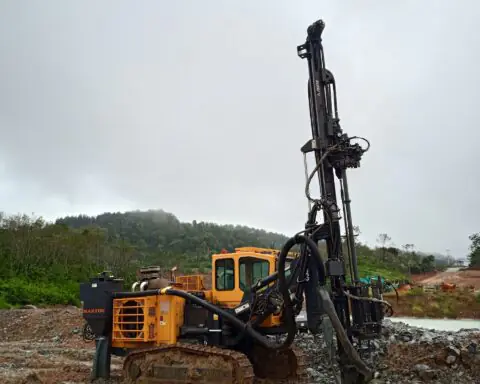
Photo by Eric Garza from Pexels
For more of the latest from the expansive government marketplace, check Government Market News daily for new stories, insights and profiles from public sector professionals. Check out our national contracting newsletter here.