

Gov. Greg Abbott has appointed a seven-member team drawn from the Legislature, the Texas Space Commission, universities and the commercial space industry to prepare Texas’ proposal for the planned United States Space Academy. House Appropriations Committee Chairman Greg Bonnen, R-Friendswood, will lead the effort.
President Donald Trump announced the initiative and signed Executive Order 14423 at NASA’s Johnson Space Center in Houston. He argued that the growth of the Space Force and commercial space industry, along with planned missions to the moon and beyond, will require a new generation of military personnel, engineers and civilian space operators. Trump described the proposed institution as comparable to West Point, Annapolis and the Air Force Academy.
The order gives the federal commission 120 days, or until late December, to recommend how the academy should be governed, what it should teach, who should qualify for admission, what service obligations graduates should have and how a permanent site should be selected. Separately, NASA is asking states to submit potential locations and development plans by Oct. 26, with no more than one governor-endorsed proposal accepted from each state.
Civilian scientists and engineers currently enter the NASA pipeline through degree programs at existing universities, internships and fellowships, direct federal hiring and employment with NASA contractors or university research partners. NASA also operates a selective Pathways internship program that can lead to permanent federal employment.
Astronauts historically followed a different route. NASA’s earliest astronauts were experienced military test pilots, many with combat and fighter-aircraft backgrounds, who were selected after establishing their careers and then trained at what is now Johnson Space Center in Houston. The astronaut corps has since expanded to include scientists, physicians, engineers and commercial-space professionals, although military and test pilots remain strongly represented.
Trump’s executive order created the federal commission, chaired by NASA Administrator Jared Isaacman, to develop the academy recommendations. The commission held its first meeting Sept. 9 and began considering governance, curriculum, admissions standards, graduate-service requirements, partnerships and implementation. The order requires the commission to recommend a process for selecting a permanent location, but it does not require the commission to choose a winning state by its December deadline.
Isaacman came to NASA after founding Shift4 and commanding two privately financed SpaceX missions. During his confirmation hearings, he argued that NASA should move faster, rely on commercial companies for capabilities they can provide and concentrate its own resources on challenges industry cannot yet solve. He also pledged that his previous relationship with SpaceX would not influence agency decisions.
The commission’s vice chairs are White House science adviser Michael Kratsios and National Economic Council Director Kevin Hassett, while NASA Deputy Administrator Matt Anderson serves as executive director. It also includes the secretaries of War and the Air Force and senior White House officials responsible for the budget, national security and presidential operations.
Following the commission’s first meeting, NASA’s Office of Strategic Infrastructure issued a request for information asking states to explain how and where they could host the academy. Responses must include a proposed permanent campus, evidence that the land is available, infrastructure and site-readiness information, environmental and regulatory considerations, nearby universities and aerospace employers, temporary teaching facilities, estimated development costs and potential state, local and private support.
NASA’s planning assumptions call for a permanent campus of at least 300 acres, with capacity for approximately 1,200 undergraduate students by fall 2031 and room to expand to about 4,000. States must also identify temporary facilities that could accommodate an inaugural class of approximately 300 students in 2028. NASA is targeting a groundbreaking by the end of 2027.
NASA classifies the solicitation as a request for information rather than a procurement. State submissions will inform the federal commission’s recommendations but will not directly produce a site award, construction contract or commitment of federal funding.
Abbott’s team includes Bonnen; Texas A&M Space Institute Director Nancy Currie-Gregg and Associate Director Robert Ambrose; University of Texas at El Paso President Heather Wilson; Texas Space Commission board member Evan Loomis; Intuitive Machines Senior Vice President Jack Fischer; and Lori Magruder, director of the University of Texas at Austin Center for Space Research. Currie-Gregg and Fischer are former NASA astronauts, while Wilson is a former secretary of the Air Force.
Texas enters the competition with a state space organization that lawmakers re-established in 2023 as commercial spaceflight and aerospace investment expanded across the state. House Bill 3447 created the current Texas Space Commission, a statewide research consortium and a grant fund intended to support civil, commercial and military aerospace development. Lawmakers initially provided $150 million for commission grants and $200 million for the Texas A&M Space Institute.
The Texas A&M institute is being built next to Johnson Space Center in the Clear Lake City area for research, mission training, robotics and work related to lunar and Martian exploration. The Houston region also offers NASA facilities, universities and a large aerospace workforce, while other parts of Texas are home to SpaceX, Firefly Aerospace and additional commercial-space operations. Abbott has not identified a preferred location within Texas, and the 32-acre Texas A&M development alone is substantially smaller than NASA’s 300-acre assumption for the permanent academy.
Texas will face competition from other centers of the nation’s space program. Florida officials are promoting the Space Coast, which includes Kennedy Space Center and Cape Canaveral Space Force Station. Alabama’s congressional delegation is backing the Huntsville area, citing Marshall Space Flight Center, Redstone Arsenal, research universities and the region’s aerospace and defense workforce. In Conroe, two City Council members have asked city administrators to explore the possibility, but the city has not been designated as Texas’ proposed site and could not submit separately from the governor-endorsed state proposal.
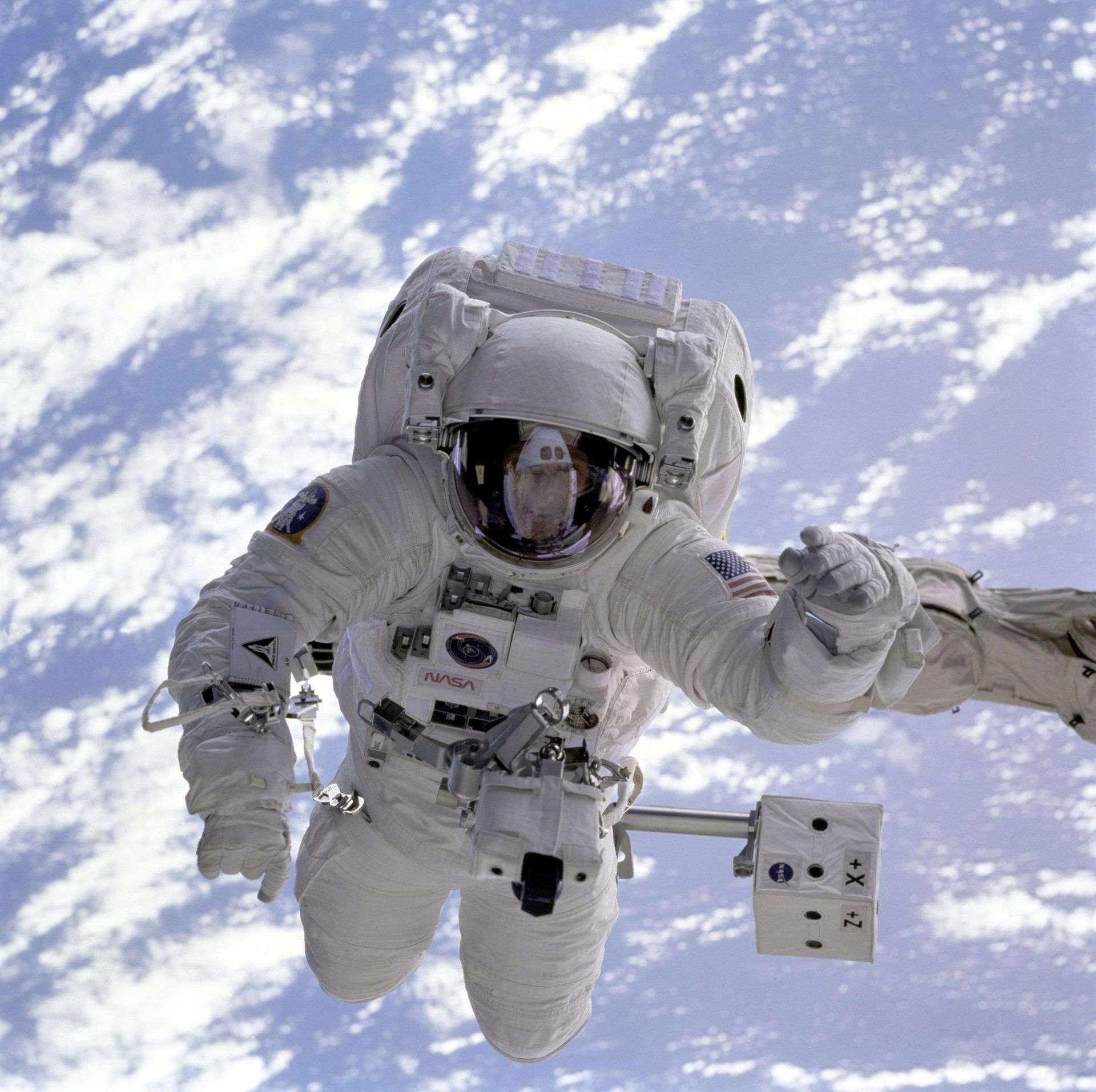
Photo by Pixabay from Pexels
For more of the latest from the expansive government marketplace, check Government Market News daily for new stories, insights and profiles from public sector professionals. Check out our national contracting newsletter here.