


The U.S. National Science Foundation (NSF) will direct $108 million to six university-based materials research centers, according to an agency announcement issued July 30. Each center will receive $18 million spread across six years, with award terms taking effect Sept. 1.
The money flows through the agency’s Materials Research Science and Engineering Centers (MRSEC) program, run by NSF’s Directorate for Mathematical and Physical Sciences.
The six centers sit at campuses across five states. The NSF said the program has reshaped important products over its five decades, dental fillings and rocket engines being among them.
Each award carries operating requirements beyond the research itself. The NSF requires every center to build, staff and maintain shared experimental facilities, then keep those facilities open to researchers from outside the campus. Those facilities feed the Materials Research Facilities Network, offering specialized equipment to researchers whose own campuses cannot supply it. The obligations run the length of the six-year award at all six schools.
The centers themselves will chase very different problems. Each organizes its work around two research groups, with topics spanning medical imaging, computing hardware and materials modeled after biological systems. The centers include:
- Columbia University — Advanced electronic materials, including ways to carry information through a material with less energy lost along the way. A second group studies engineered materials in which light and matter behave as one. University officials said the award is Columbia’s third MRSEC since 2014.
- Princeton University — Electronic materials for faster devices, sharper sensors and future quantum computers. A second group examines the way cells assemble themselves into living systems, hoping to design synthetic materials that behave similarly.
- Harvard University — Artificial intelligence paired with lab equipment that runs experiments on its own, speeding the search for new soft materials, according to the NSF. The tools will help design tiny gels and capsules useful in tissue engineering.
- Massachusetts Institute of Technology — Scintillators, materials that glow when X-rays strike them, according to the NSF. Reshaping them at a very small scale could sharpen medical images while cutting patient radiation. A second group studies sulfur-based liquids that operate at high heat, used to produce copper, neodymium and other critical minerals.
- University of California, San Diego — Quantum metamaterials, along with ultrathin electronic materials whose molecular structure is arranged to direct electron behavior, according to university officials.
- University of Nebraska-Lincoln — Sheets of material only a few atoms thick, stacked at slight angles to produce unique electrical and magnetic behavior. A second group studies MXenes, atom-thin materials that show potential as electrical conductors.
The centers do not work alone. The NSF said more than 20 outside organizations are attached to the six awards, spanning research institutions, technology firms and educational groups. Several Department of Energy (DOE) national laboratories also take part, as does the National Institute of Standards and Technology (NIST).
The NSF writes those partnerships into the awards themselves. The agency asks each center to lay out how it plans to work with private industry, national labs, nonprofits and government agencies, along with what those partnerships should ultimately deliver.
The arrangements look different from campus to campus. UC San Diego officials, for example, said the center will handle its computational modeling work with the San Diego Supercomputer Center. At Nebraska, officials said much of the research will run through on-campus facilities, including a modern nanofabrication clean room.
Competition for the awards ran more than a year. The NSF collected preliminary proposals in June 2025, invited a smaller group to submit full applications, then closed that window Jan. 27, 2026. Finalists presented to expert panels at the NSF headquarters before the agency made its picks.
The awards fund people alongside the laboratories. The NSF expects the six centers to support more than 60 early-career researchers, more than 150 graduate students and more than 250 undergraduates. Each center must also run an undergraduate research program drawing at least half its participants from other campuses, according to the NSF.
Nothing about the money is guaranteed past year six. The NSF ties continued funding to a center’s progress plus the findings of outside reviewers, according to the program details. Centers that want support beyond the initial term must compete again against fresh proposals from other institutions.
These awards appear to be one piece of a wider push. Days after the July 30 announcement, the NSF committed another $50 million to two Materials Innovation Platforms at Texas A&M University and the University of Wisconsin-Madison. Both will serve researchers from academia as well as private industry.
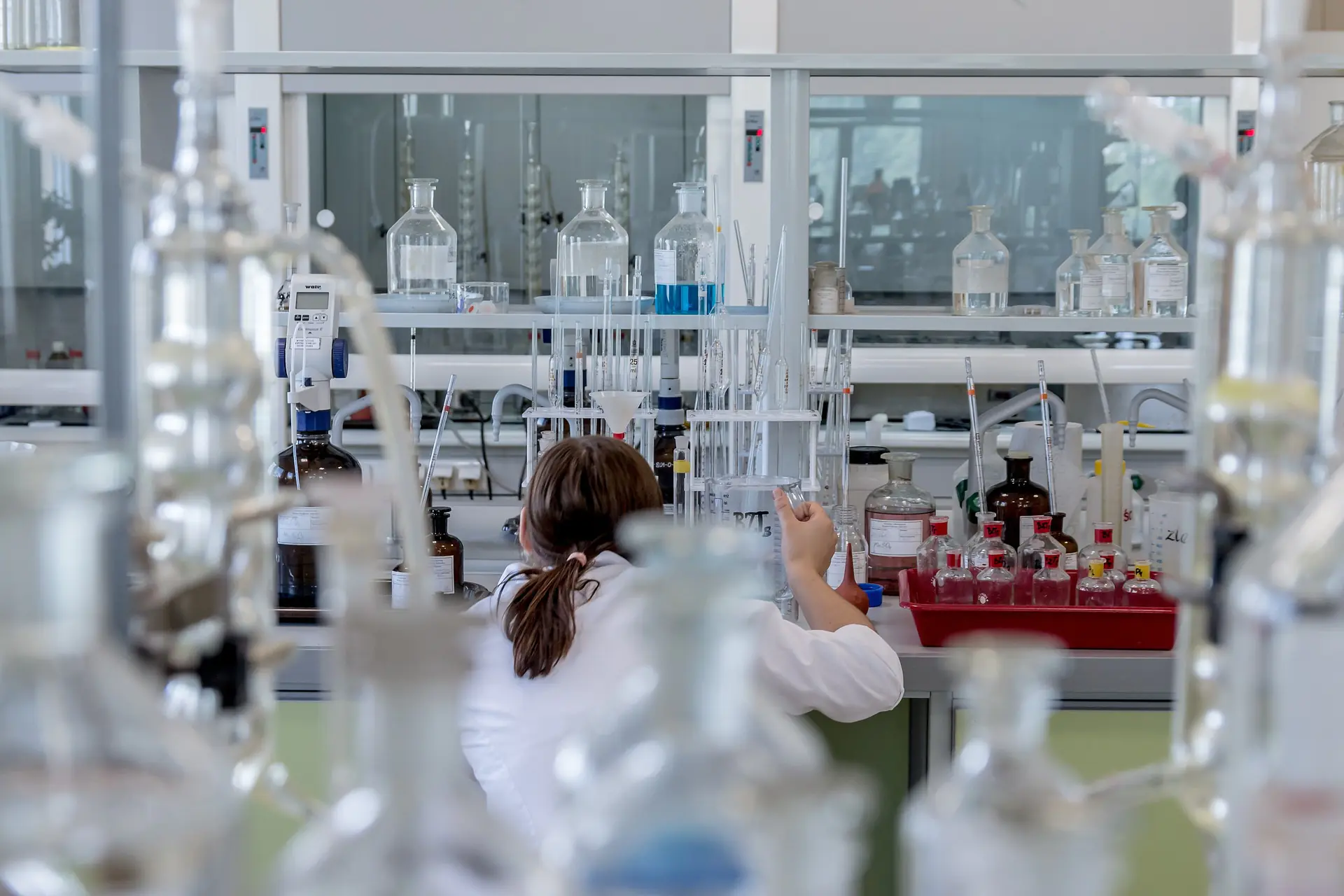
Photo by jarmoluk from Pixabay
For more of the latest from the expansive government marketplace, check Government Market News daily for new stories, insights and profiles from public sector professionals. Check out our national contracting newsletter here.