


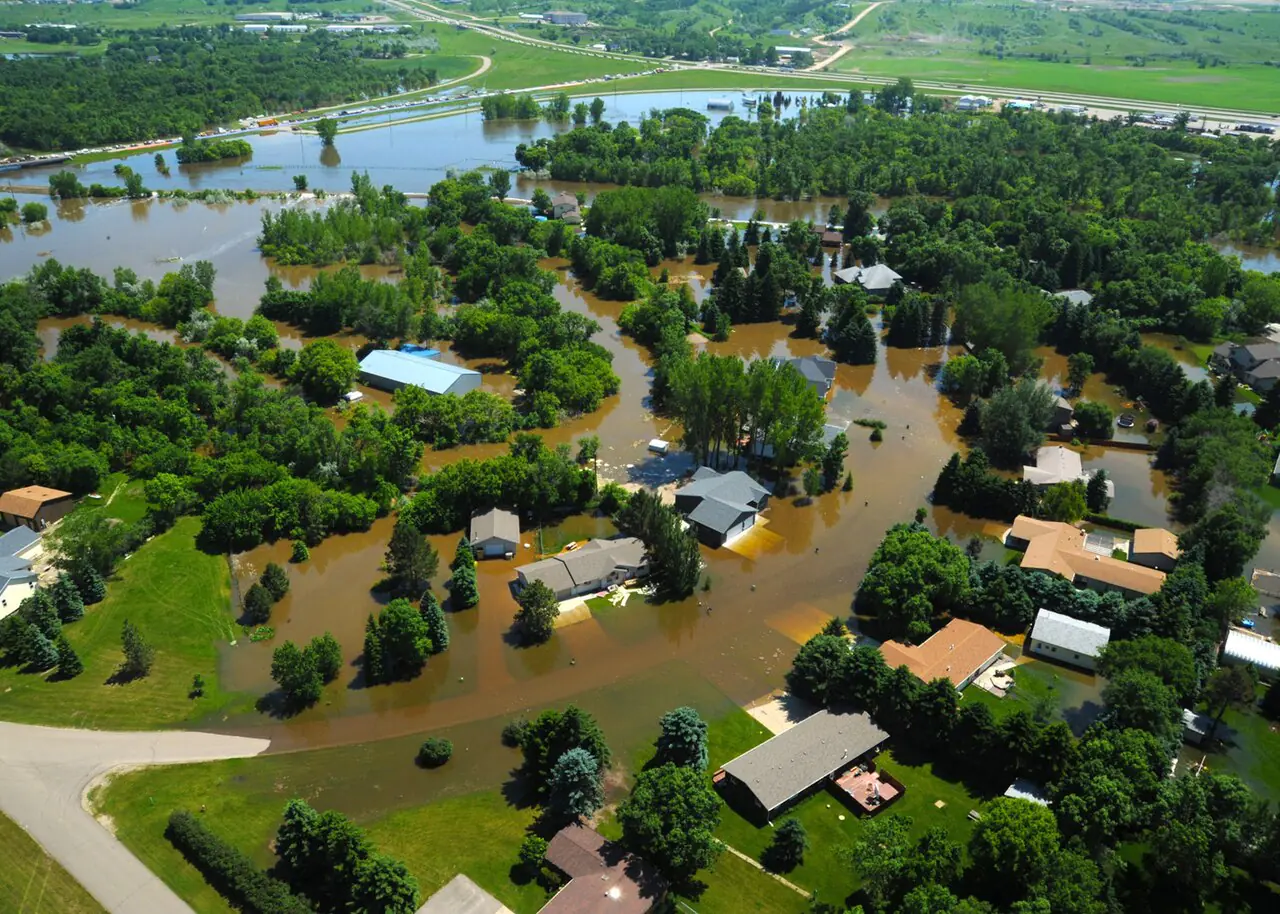
City leaders in Minot, North Dakota, are building for the next generation of North Dakotans, announcing a new plan to invest over $880 million in city infrastructure over the next five years.
The Minot City Council on May 4 adopted a new Capital Improvement Plan (CIP) totaling $888.3 million, with about $200.3 million in projects slated to begin in 2027.
The plan is updated annually and serves as a programming tool, with adoption acting as a guide and not a commitment of funding for individual projects. Each project includes an anticipated funding breakdown, which is drawn from a mix of federal, state and local sources. State funds carry the largest share across the five years at about 45%, with federal dollars and dedicated local sales tax revenue covering most of the remainder.
The CIP covers several major initiatives, including the Mouse River Enhanced Flood Protection Project, which accounts for about 68% of the five-year plan at $604.9 million. Several phases of this effort are already complete, and two are more under construction, while the Maple Diversion and Downtown Levee are scheduled to begin construction in 2027.
The Maple Diversion is the single largest project in the plan, coming in at about $132.9 million spread across all five years. It is supported by about $86.4 million in federal funds, $30.2 million in state funds and $16.3 million in local sales tax. The Downtown Levee project, meanwhile, runs about $20 million from 2027 to 2028.
Flood control spending ramps up sharply in the following years, moving from $86 million in 2028 to about $199 million in 2029 and $174 million in 2030. This period features several major projects reaching peak construction phases, including the 27th Street Diversion, the Burdick Bridge and West Valker Road Levee, the Livingston Coulee Bypass and the Fairgrounds Levee.
The 27th Street Diversion is the largest single piece of this ramp-up, coming in at about $155 million across four years. It peaks at an estimated $73 million in projected spending in 2031.
Several other areas received particular attention in the plan, including engineering, transportation, public safety, utilities, sewer and public works. Significant projects under these categories include:
- Third Street Bridge Replacement ($55.7 million): Full replacement of the Third Street Northeast bridge, with most spending pushed to 2030 and 2031
- South Broadway Reconstruction ($45.5 million): Reconstruction of South Broadway from the south city limits to 19th Avenue Southwest, with all spending currently planned for 2030
- Third Street East and Central Avenue Reconstruction ($22.4 million): A planned three-year street reconstruction of Third Street Northeast from Second Avenue Southeast north into downtown
- 11th Avenue Southwest Watershed Project ($15 million): Storm sewer improvements paired with full street reconstruction of 11th Avenue Southwest from Broadway to Sixth Street Southwest. Projected costs peak at $13.3 million in 2029
- 16th Street Southwest Reconstruction Phase 2 ($10.9 million): Planned street reconstruction in 2028 of 16th Street Southwest from Burdick Expressway to Second Avenue Southwest, continuing work from earlier CIP cycles
- Police Department Facility ($10 million): Continuation of a multiyear police station remodel, with $5 million in yearly funding for both 2027 and 2028
Several longer-range needs sit outside the CIP’s five-year window. City Engineer Lance Meyer has pointed to a decade-long rebuild of Third Avenue and Fourth Avenue Northwest between Broadway and the U.S. Highway 83 Bypass, along with aging underground infrastructure in parts of northeast Minot that are approaching 100 years old.
Final adoption of the CIP clears the way for the city to advance design, procurement and bid solicitations across the 2027 slate, with the engineering and airport departments handling the largest share of near-term projects. Most major 2027 starts are slated to extend across multiple construction seasons, with several flood control and street reconstruction projects running through 2028 or later.
Photo by Staff Sgt. Sharida Jackson of The National Guard, CC BY 2.0 https://creativecommons.org/licenses/by/2.0, from Wikimedia Commons
For more of the latest from the expansive government marketplace, check Government Market News daily for new stories, insights and profiles from public sector professionals. Check out our national contracting newsletter here.