


Federal officials at the U.S. Department of Energy (DOE) have released its latest roadmap charting the future of fusion energy development and commercialization, marking a significant step toward a new era of domestic energy production.
The Fusion Science and Technology (FS&T) Roadmap is a national strategy that will support fusion pilot plant development and the production of fusion power in the mid-2030s. The roadmap builds on previous iterations, most recently published in October 2025. Through the strategy, the DOE will consolidate and prioritize fusion science, technology, infrastructure, workforce development and commercialization within a single actionable document.
The DOE’s Office of Fusion (OoF) will implement the roadmap, leveraging AI, advanced computing and public-private collaboration to make strides in fusion technology research and development. Critically, the office will build critical infrastructure to help close existing and future fusion materials and technology gaps.
The three main drivers for the roadmap – infrastructure development; innovation through research, computing and AI; and growing the fusion ecosystem through partnerships – will guide investment for the foreseeable future. To make up ground and rapidly advance fusion development, the DOE will build upon the $10 billion in private investments already made to further close technology gaps preventing the full commercialization of fusion energy.
To achieve these goals, the OoF will execute initiatives aligning with its Build-Innovate-Grow strategy. Each category includes its own set of key actions tied to a timeline to ensure that the nation capitalizes on fusion energy opportunities in the short-, mid- and long-term scale.
The Build portion will predominantly target the construction and expansion of essential infrastructure and technologies needed to sustain and empower the industry. The first major action will center around delivering FS&T infrastructure to aggressively deploy fusion energy as quickly as possible. These structures must be engineered for extreme conditions, designed to test components in a nuclear environment and sustain burning plasma infrastructure technologies. The OoF will also develop an AI-fusion digital convergence platform to drive cutting-edge discoveries and fusion energy delivery.
As part of the strategy’s Innovate component, the OoF will pursue innovative and transformative research on four key technologies to help manage risks associated with commercializing fusion energy. These include:
- Stellarators.
- Liquid-metal PFCs.
- Alternate Fusion Concepts.
- Measurement Innovation.
Additional innovation efforts will create pathways toward developing cost-competitive fusion power plants. Traditional fusion infrastructure – particularly in large-scale demonstrations – is prohibitively expensive. To resolve that, the office will pursue collaborations with international and private partnerships while utilizing private fusion sector R&D infrastructure investments to spur innovation.
The final portion of the strategy – Grow – embraces the future of the program to ensure it can effectively scale and expand as fusion energy becomes more affordable and achievable as a viable commercial product. To that end, the office will support public-private partnerships (P3) as a means to access more resources and accelerate timelines. Additional measures include:
- Seeding fusion supply chains.
- Fostering talent by enabling fusion workforce pathways.
- Leveraging advanced nuclear R&D and deployment.
- Supporting a practical path to fusion energy adoption.
- Providing a path to commercialization.
DOE is expected to create more grant funding opportunities in the future to support these endeavors. Millions in dollars have already been allocated to pursue fusion energy development, most recently in September 2025 after issuing $134 million to secure new fusion energy leadership.
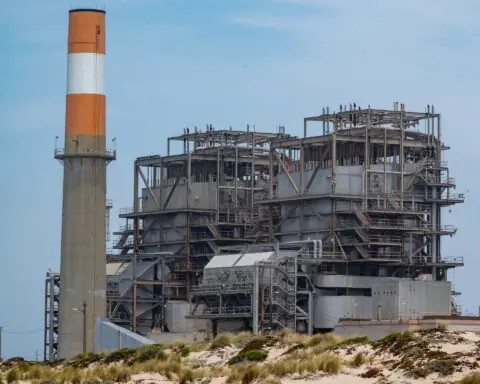
Photo by Oak Ridge National Laboratory, CC BY 2.0 https://creativecommons.org/licenses/by/2.0, from Wikimedia Commons
For more of the latest from the expansive government marketplace, check Government Market News daily for new stories, insights and profiles from public sector professionals. Check out our national contracting newsletter here.