


The U.S. Army has opened the second portion of its Strategic Capital Initiative (SCI) with a request for proposals (RFP) seeking private partners to build and run commercial power plants. The plants will be established at seven different Army installations.
The solicitation carries a tight response window, with proposals due June 29.
The RFP advances the first of the initiative’s six pillars, Energy Resilience and Dominance, which focuses on securing reliable energy sources when grid failures occur. The pillar follows a dual-purpose model, where under normal operating circumstances, the facility would feed power into the commercial grid like any private power plant. If the grid goes down, that same facility would switch to powering the host installation directly.
The Army would not buy or build any of this. Instead, it would grant one or more enhanced use leases (EUL), a legal arrangement that lets a private developer use government land for a commercial project. Per the solicitation, the expected lease term is 50 years.
Selected partners would carry the full project lifecycle, including financing, design, construction, operation, and eventual decommissioning. The RFP notes that the Army will not provide any monetary contribution for these phases.
The seven locations chosen by the Army include:
- Aberdeen Proving Ground, Maryland.
- Fort Detrick, Maryland.
- Fort Drum, New York.
- West Point Military Reservation, New York.
- Picatinny Arsenal, New Jersey.
- Letterkenny Army Depot, Pennsylvania.
- Tobyhanna Army Depot, Pennsylvania.
Potential Partners may bid on one or several sites, along with all or part of the available land at any given installation.
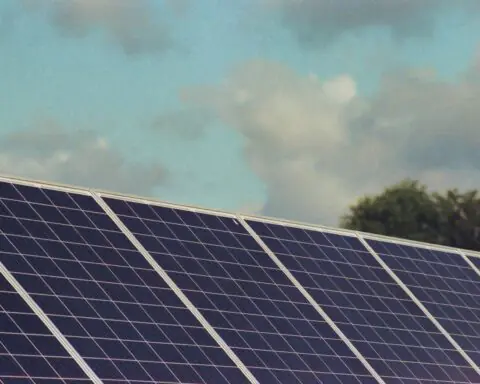
The Army has stated that it will consider energy systems such as solar, natural gas, geothermal and nuclear. The RFP notes that if the proposal includes a nuclear option, it must be capped at 500 megawatts per unit.
A core requirement of the RFP is independent resilience, which requires the system to deliver enough power to sustain mission-critical operations for at least 14 days, while also switching to power generation for the base within four hours of grid failure. During normal operations, the Army expects power to be sold to a third-party entity lined up by the private partner.
In exchange for the lease, aside from the mandatory energy requirements, the Army expects in-kind consideration for the installation itself. This could include infrastructure upgrades, improvements to mission capability or reduced cost to the Army. The RFP notes that cash is also accepted, or a combination of both.
The opportunity is being run by the U.S. Army Corps of Engineers (USACE) Omaha District. It follows a March 2 Request for Information (RFI), in which the Army invited private industry to co-invest in six modernization pillars. Officials described the effort as a value-for-value model that trades secure land and steady demand for energy and modern facilities.
Photo by Diana ✨ from Pexels
For more of the latest from the expansive government marketplace, check Government Market News daily for new stories, insights and profiles from public sector professionals. Check out our national contracting newsletter here.