


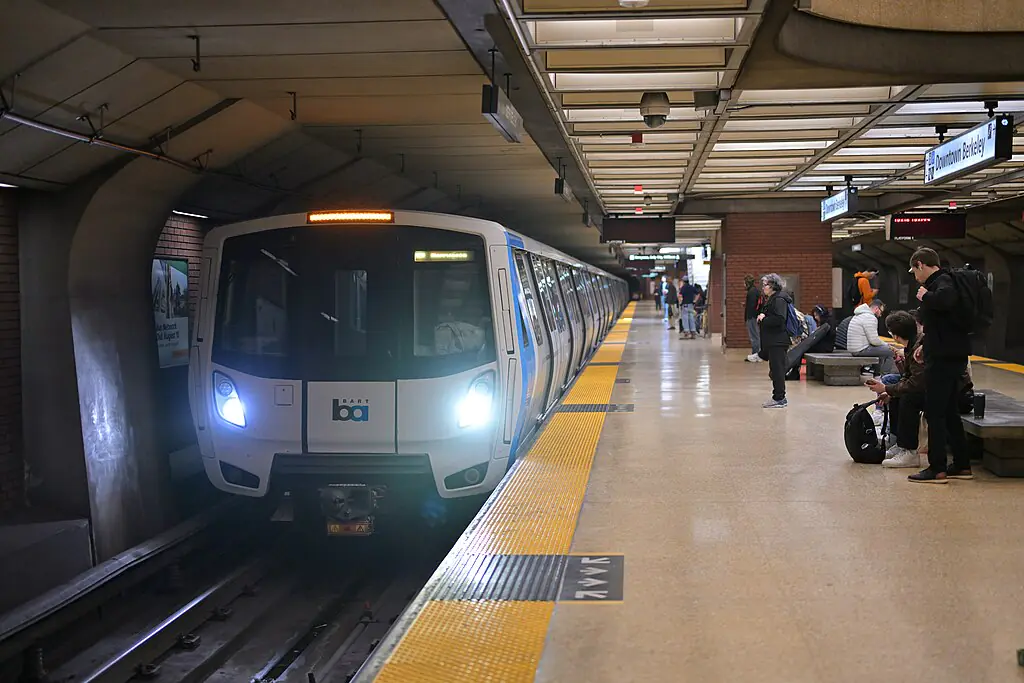
California has authorized a $590 million emergency loan to stabilize four Bay Area transit agencies. The funding will help Bay Area Rapid Transit, the San Francisco Municipal Transportation Agency, Caltrain and AC Transit maintain current service levels while regional leaders pursue a long-term revenue solution.
Without the loan, transit officials warned agencies would have been forced to sharply reduce train and bus frequency, close stations, eliminate routes and lay off workers as early as the next fiscal year. Ridership remains below pre-pandemic levels as many Bay Area residents continue to work remotely, drastically reducing the fare revenue that once supported daily operations.
The Legislature authorized the loan through the California State Transportation Agency to the Metropolitan Transportation Commission, which will distribute the funds to the four operators. The money is intended to cover operating expenses for systems that have struggled to balance budgets as passenger fares and transportation tax revenues declined after the COVID-19 pandemic. Federal COVID-19 relief funds helped stabilize transit agencies in recent years, but those dollars are being depleted.
The loan must be repaid over 12 years, with interest-only payments during the first two years. Officials describe the measure as a bridge to give the commission and transit agencies time to restructure a system that was built around commuter demand. Before the pandemic, passenger fares covered as much as 70% to 75% of operating costs for some agencies.
Regional leaders are now pursuing a November 2026 ballot initiative that would establish a half-cent regional sales tax to provide sustainable operating revenue. If approved, the measure would take effect in mid-2027.
Photo by 4300streetcar, CC BY 4.0 https://creativecommons.org/licenses/by/4.0, from Wikimedia Commons
For more of the latest from the expansive government marketplace, check Government Market News daily for new stories, insights and profiles from public sector professionals. Check out our national contracting newsletter here.