

The California Independent System Operator (CAISO) launched the Extended Day-Ahead Market (EDAM) on May 1, opening a new regional electricity market across the Western United States. CAISO, the nonprofit operator that runs California’s high-voltage power grid and wholesale electricity market, said the new market is designed to lower customer costs and improve reliability for participating utilities throughout the region.
EDAM is the first day-ahead electricity market to operate across the broader Western Interconnection, the grid that serves much of the western U.S. along with parts of Canada and Mexico. A day-ahead market is the part of the wholesale system where most power is bought and scheduled about 24 hours before it is delivered, with generation lined up against forecasted demand for the next day. Until now, that kind of regional coordination had not been available to Western utilities outside California.
Through EDAM, participating utilities can pool their next-day supply, demand and transmission offers into a single shared process that runs across the Western footprint, rather than each one planning its own needs in isolation. The participants are known in the industry as balancing authorities, the entities responsible for keeping electricity supply and demand in balance across a defined territory.
A 2022 study commissioned by CAISO and conducted by consulting firm Energy Strategies projected that a fully built-out, West-wide version of the market could deliver up to $543 million in annual operational savings, a roughly 4.5% reduction from current production costs. The same study estimated up to $557 million in additional annual capacity savings through shared planning reserves and more coordinated resource procurement, bringing the combined potential benefit to as much as $1.2 billion per year.
PacifiCorp, one of the largest electric utilities in the West, is the day-one participant. Its two service territories cover multiple western states, giving the market significant geographic reach at launch.
Portland General Electric (PGE), Oregon’s largest investor-owned utility, is scheduled to join in fall 2026, and several additional Western utilities and grid operators have committed to enter the market in 2027 and beyond. CAISO lists the Balancing Authority of Northern California (BANC), the Los Angeles Department of Water and Power (LADWP), the Public Service Company of New Mexico (PNM), Turlock Irrigation District (TID) and Imperial Irrigation District (IID) among them.
EDAM is not starting from zero. CAISO has operated a related real-time market, the Western Energy Imbalance Market (WEIM), since 2014. The WEIM handles short-term electricity trades close to the moment power is delivered, and EDAM extends that same regional coordination idea into the day-ahead timeframe.
The WEIM has grown to 21 participating balancing areas outside CAISO and now covers about 80% of electricity demand across the Western Interconnection. Cumulative benefits to participants surpassed $8.6 billion as of the first quarter of 2026, with $382 million delivered during that quarter alone. The market has also helped participants avoid more than 1.15 million metric tons of carbon dioxide emissions since 2014, a track record CAISO and state officials have pointed to as the foundation for extending the model into the day-ahead timeframe.
EDAM’s market design was approved in 2023 by CAISO’s Board of Governors and the Western Energy Markets (WEM) Governing Body, the panel that oversees market rules for non-California participants. The Federal Energy Regulatory Commission (FERC), which regulates wholesale electricity markets at the federal level, signed off on the related tariff, the formal set of rules and rates that governs how the market operates.
The launch also follows Assembly Bill (AB) 825, bipartisan legislation Gov. Gavin Newsom signed in 2025. The law sets the stage for the WEIM and EDAM to eventually be governed by an independent regional organization, rather than continuing under CAISO’s California-based governance structure.
Participation in EDAM is voluntary, with low entry costs and no exit fees if a utility later decides to leave. Joining typically involves an onboarding period in which utilities work through systems integration, market simulation and operational readiness testing before going live.
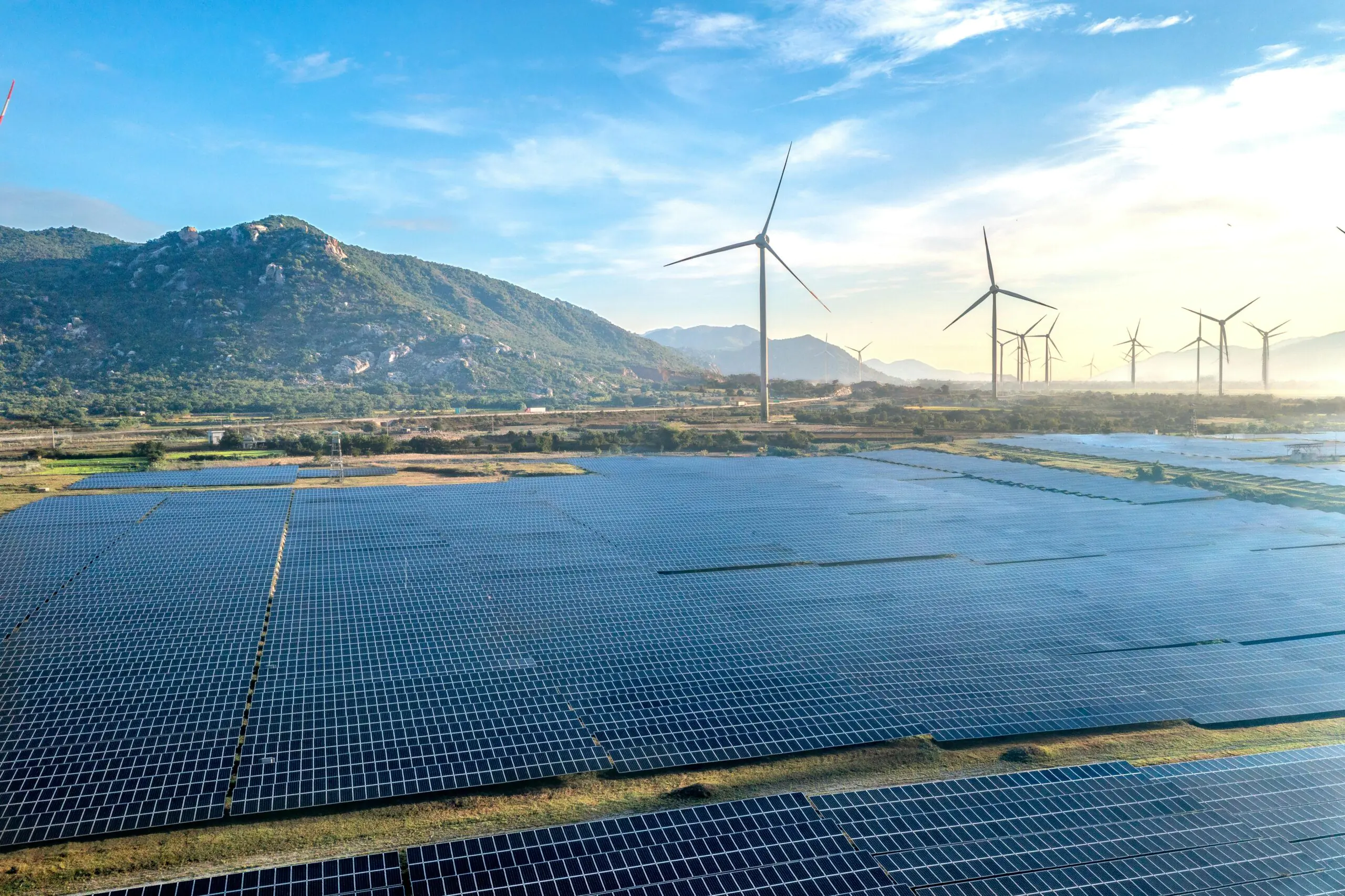
Photo by Quang Nguyen Vinh from Pexels
For more of the latest from the expansive government marketplace, check Government Market News daily for new stories, insights and profiles from public sector professionals. Check out our national contracting newsletter here.