


Researchers at The University of Texas at Austin released a white paper May 6 examining the water footprint of the state’s fast-growing data center sector. The paper estimates data centers could grow from less than 1% of Texas water use today to between 3% and 9% by 2040. The range depends on how the industry expands, what cooling technologies operators choose and where the power comes from.
The findings come as Texas works through several overlapping water issues. Corpus Christi is approaching a possible water emergency that could prompt sharp cuts across residential, commercial and industrial users. The Texas Water Development Board (TWDB), meanwhile, is projecting $174 billion in needed water investment over the next 50 years. That figure is more than double its prior estimate and reflects a combination of population growth, drought and aging infrastructure.
The paper, titled “Water Use Requirements for Data Centers in Texas,” was developed by the Collaborative Optimization and Management of Power Allocation – Surface and Subsurface strategies (COMPASS) consortium at UT Austin’s Bureau of Economic Geology. The Energy Institute, the Jackson School of Geosciences and the Cockrell School of Engineering also contributed.
According to the paper, more than 400 data centers are operating or under construction in Texas, with industry power capacity projected to surpass 70 gigawatts (GW) by 2030. The paper places the combined data center water footprint, which includes direct cooling water plus indirect water tied to electricity generation, at about 25 billion gallons in 2025.
The TWDB on April 16 voted to publish a draft of the 2027 State Water Plan, which underpins that $174 billion estimate. The figure sits well above the $80 billion projected in the prior plan.
The draft plan compiles abouot3,000 projects from 16 regional water planning groups and identifies thousands of recommended strategies. Those include aquifer storage and recovery, brackish groundwater desalination, water reuse and conservation programs. Public comment on the draft runs through the end of May, with formal adoption expected by January 2027.
In Corpus Christi, those statewide pressures are already showing up at the reservoir level. The city’s two primary reservoirs are reportedly near single-digit capacity and officials have indicated a Level 1 water emergency could arrive as soon as September. If declared, the emergency would prompt a proposed 25% reduction across residential, commercial and industrial users.
Surrounding Coastal Bend communities have begun pursuing their own supply solutions in response, including emergency wells and a revived seawater desalination effort previously set aside on cost grounds.
Those local efforts point to a much larger statewide funding question. Texas voters in November 2025 approved Proposition 4, which dedicates up to $1 billion per year in existing state sales tax revenue to the Texas Water Fund for 20 years. The measure represents the largest dedicated water infrastructure commitment in state history.
Even so, the $20 billion total falls well short of the $174 billion identified in the draft state water plan. The gap suggests Texas may need to about double or triple its current pace of dedicated water investment to keep pace with projected need.
Funding alone, however, may not be enough to address the alignment issues researchers flag in the white paper. The COMPASS team points to three coordinated steps that could help close the gap between data center growth and water resource planning.
The first calls for greater transparency and communication among data center operators, utilities, municipalities, state agencies and private developers. The second recommends improved mapping of projected industry growth against regions already expected to face water shortages. The third encourages movement toward integrated planning frameworks that combine hydrologic projections, grid capacity models, land-use constraints and permitting processes.
Those planning recommendations point to a broader project pipeline taking shape across the state. Researchers also highlight technology and sourcing options that could ease data center water intensity. Those include liquid and immersion cooling systems, hybrid heat pump and evaporative configurations and broader use of nontraditional water sources such as brackish groundwater, seawater and treated produced water from the Permian and Eagle Ford basins.
Funding through Proposition 4 is expected to flow primarily through the TWDB’s existing low-interest loan and grant programs, with new financial assistance becoming available in state fiscal year 2029. The timeline opens a long-term pipeline for projects likely to draw on a mix of public funding, private investment and partnerships among operators, utilities and state agencies. Work could span desalination and treatment plants, conveyance infrastructure, aging-system rehabilitation and advanced cooling retrofits at AI-focused facilities.
The COMPASS researchers stop short of predicting how the next decade will unfold, noting that outcomes will depend on choices made by operators, utilities and regulators working in closer coordination than they typically have to date.
What is clear is that the state’s water systems and digital infrastructure are now on overlapping timelines, with decisions in the next few legislative and budget cycles likely to shape how each develops alongside the other.
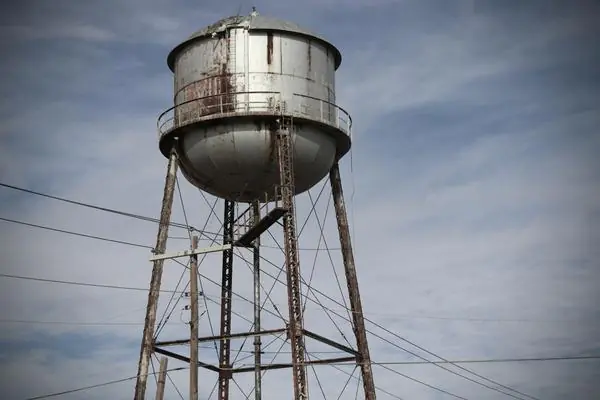
Photo by Andy Arthur from Pexels
This story is part of the weekly Texas Government Insider digital news publication. See more of the latest Texas government news here. For more national government news, check out Government Market News daily for new stories, insights and profiles from public sector professionals.