

The Wisconsin Department of Natural Resources (DNR) announced more than $282 million in loans and subsidies through the Safe Drinking Water Loan Program for 74 municipalities to upgrade water infrastructure and tackle contaminants such as per- and poly-fluoroalkyl substances (PFAS) and nitrates.
The Safe Drinking Water Loan Program makes financial aid available to communities statewide. Since its inception in 1998, the DNR and the Wisconsin Department of Administration have provided nearly $1.5 billion in assistance.
Priority is given to infrastructure projects in small and disadvantaged communities. Among the preliminarily approved projects: nearly $2 million for the village of Fairchild to address well contamination; almost $5 million in Hales Corners to tackle PFAS contamination; and about $1.3 million in Suring to build a second water main crossing to boost redundancy and ensure system reliability.
A portion of the funding comes from federal grants, including $18.7 million from the Base Drinking Water State Revolving Fund, $42.6 million from the BIL Supplemental fund and $13.1 million from Bipartisan Infrastructure Law (BIL) funds specifically for emerging contaminants.
Municipalities are prioritizing emerging contaminants such as PFAS and nitrates because of their health risks and growing prevalence in Wisconsin. PFAS were detected in 71% of a statewide survey of 450 shallow private wells (≤ 40 ft deep), though only about 1% of those samples exceeded the state’s health-advisory levels.
These “forever chemicals” persist in the environment, accumulate in human bodies and have been linked to cancer, liver damage and immune system effects. Nitrate contamination, driven largely by agricultural runoff, also threatens public health, particularly in rural communities. Disadvantaged and small communities are especially vulnerable as many lack the resources to upgrade infrastructure on their own, so these subsidized loans and grants are indispensable for ensuring safe, long-term drinking water.
Gov. Evers said the announcement aligns with the 2025-27 biennial budget, which boosted borrowing for the Environmental Improvement Fund by more than $730 million to expand low-interest financing for clean water and drinking water projects. The funding will be distributed as municipalities incur eligible costs over the next year.
The final 2026 Safe Drinking Water Loan Program funding list will be confirmed after a 30-day window, during which municipalities may request a reevaluation of their priority scores.
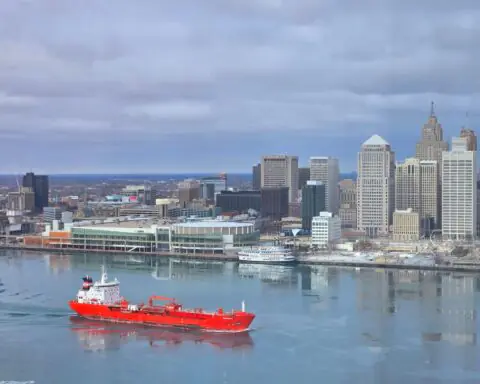
Photo by Zulfugar Karimov from Pexels
For more of the latest from the expansive government marketplace, check Government Market News daily for new stories, insights and profiles from public sector professionals. Check out our national contracting newsletter here.