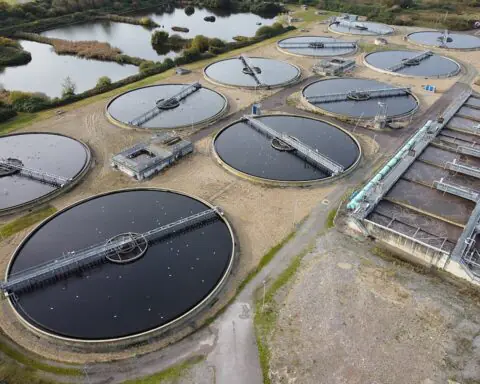



America’s wastewater infrastructure is suddenly having a very visible moment, and the numbers explain why. The U.S. Environmental Protection Agency’s (EPA) latest Clean Watersheds Needs Survey places the estimated amount of funding needed for clean water infrastructure improvements over the next two decades is $630.1 billion, and some of the needs are immediate. This critical gap is forcing thousands of communities to move projects from “someday” to “shovel-ready”, and 2026 is shaping up to be a year filled with wastewater infrastructure initiatives throughout the country.
Extreme weather is stress-testing systems built for a different era. Recent studies outline separate billion-dollar U.S. weather and climate disasters in 2024 alone, with total damages near $182.7 billion. These back-to-back events have turned nuisance overflows into public health and regulatory crises. The result is a nationwide surge of wastewater plant expansions, sewer separation work, and advanced treatment upgrades, because communities can’t permit, grow, or stay compliant on yesterday’s pipes.
Funding is arriving through a layered capital stack that blends federal, state, and local sources, with federal dollars frequently flowing through state-run channels that can be combined with local bonds. The largest funding pipeline is still the Clean Water State Revolving Fund, where EPA provides capitalization to states in the form of low-interest loans and, in some cases, additional subsidies to wastewater and stormwater projects.
For larger, more complex undertakings, EPA’s Water Infrastructure Finance and Innovation Act (WIFIA) program has become a critical companion tool, offering long-term, low-cost financing that can be paired with SRF and local funding; EPA reports WIFIA has closed 141 loans totaling $22 billion in credit assistance, supporting $48 billion in water infrastructure investment. States often add their own clean-water loan and grant programs on top of SRF structures, and local governments still shoulder long term responsibility through rate-supported capital programs and voter-approved bond measures.
This intense national focus isn’t being driven by a single cause. There are various reasons, the collision of replacement needs and a maintenance backlog with climate realities along with rising expectations for performance, monitoring, and long-term compliance. Sustainability goals are also shaping designs as a practical strategy: projects increasingly incorporate advanced controls, emissions monitoring, energy efficiency, and treatment improvements aimed at better downstream outcomes and fewer regulatory surprises.
Utility officials in the Josephine Municipal Utility District in Texas are planning a significant expansion across the full wastewater service area, with capacity at the existing lagoon facility increasing from 0.5 MGD to 1.5 MGD. The project will also add lift stations and force mains, and about 150,000 feet of new gravity pipelines to relieve strain and support rapid growth while meeting Texas Commission on Environmental Quality requirements. Construction is anticipated to begin in 2028.
In Brentwood, Missouri, the Metropolitan St. Louis Sewer District is advancing a sewer separation project designed to reduce combined sewer overflows and basement backups by splitting aging combined infrastructure into distinct wastewater and stormwater systems, with design underway and construction planned to begin in 2026.
In Sandpoint, Idaho, voters are backing a full wastewater treatment plant replacement through a $130 million bond because the current facility is past its useful life, with plans that modernize core treatment processes, add UV disinfection, upgrade SCADA and electrical systems, and improve nutrient control to better protect local waters well beyond 2050, with construction targeted for late 2026.
And in Bellingham, Washington, leaders are moving forward with a $40 million upgrade at the Post Point Wastewater Treatment Plant focused on emissions-control modernization for sludge incinerators, including continuous emissions monitoring and updated pollution-control equipment, positioned to protect long-term compliance and extend solids handling life as the work phases toward procurement and construction later in the decade. Delivery of this initiative will be phased, and contracts will be let over several years. Currently in the design and regulatory stage, the project will remain in that work phase for a few more months. Once design packages are finalized sometime in 2026, the procurement process will begin. However, the first construction packages could possibly be delayed until sometime in early 2027. Construction is anticipated to continue through 2030.
Taken together, the wastewater boom is less a trend than a reckoning: communities are upgrading because growth is colliding with aging assets, more intense rain, and stricter expectations and regulations for water quality and system reliability. The only real question for 2026 is not whether more projects are coming, but how many communities can secure the funding, design talent, and construction runway before the next storm, or the next permit deadline makes the timeline decision for them. Contracting firms experienced in all aspects of wastewater treatment plant projects will be in high demand throughout the U.S.in 2026.
Photo by Nithin PA from Pexels
This story is a part of the weekly Government Contracting Pipeline digital news publication. See more of the latest government contracting news here. For more national government news, check Government Market News daily for new stories, insights and profiles from public sector professionals.