


Representatives from the transportation industry are petitioning the federal government to establish a new federal surface transportation bill to support initiatives and projects nationwide
With the 2021 Infrastructure Investment and Jobs Act’s (IIJA) funding cycle is set to expire Sept. 30, stakeholders are calling the federal government to shape its five-year successor for surface infrastructure projects. As congressional committees begin holding discussions and hearings to design the new legislation, advocacy groups are voicing their support to build investment in public transit and passenger rail with a $268 billion allocation for the next five years.
The American Public Transportation Association (APTA) approved the Surface Transportation Authorization Recommendations during its February Board of Directors meeting. The recommendations draw from an earlier report analyzing the economic impact of investing in public transportation, finding that every $1 billion used for transit generates $5 billion in gross domestic product and $251 million in tax revenue.
Capitalizing on these investments is APTA’s highest priority as the organization urges Congress to promote and streamline public transit and passenger rail projects. Its recommendations include splitting the funding – $138 billion for public transit and $130 billion for passenger rail – to build on current investment, accelerate project delivery by eliminating statutory and regulatory barriers and strengthen collaborative, local decision-making.
These allocations are designed to address inflation that has driven up costs over the last five years, restoring purchasing power and enabling forward movement. APTA projects that initiatives funded by these investments will generate an additional $140 billion in annual impacts for the United States economy.
Infrastructure projects move notoriously slow, typically attributed to excessive paperwork, permitting, grant funding and other components. APTA seeks to accelerate project delivery through a handful of reforms, including streamlining bus and ferry grant programs, removing barriers and implementing commonsense reforms.
Currently, the Federal Transit Administration (FTA) has several bus and passenger ferry grant programs. APTA recommends that the administration consolidate them into three key initiatives while simultaneously boosting the amount of funding distributed by formula:
- Buses and Bus Facilities Formula Grants.
- Buses and Bus Facilities Competitive Grants.
- Passenger Ferry Competitive Grants.
APTA also recommends that the FTA reforms the Capital Investment Grants (CIG) program to prioritize two objectives: building great projects and protecting taxpayer interest while eliminating extraneous requirements that do not pertain to either goal. Additional measures should be taken to establish clear safety decision-making authority and to remove burdensome requirements that limit development and progress.
Emphasizing collaborative, local decision-making processes will play an essential role in improving transportation outcomes. Achieving better support for these measures would start with providing direct funding to public transit agencies in small, urbanized areas, enabling these agencies to make project decisions quickly and accelerate project delivery. APTA also recommends ensuring that public transit’s voice is heard in the Metropolitan Planning Organization (MPO) decision-making process through guaranteed voting representation.
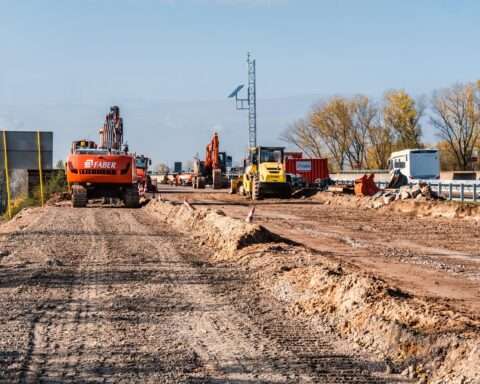
Photo by Burst from Pexels
For more of the latest from the expansive government marketplace, check Government Market News daily for new stories, insights and profiles from public sector professionals. Check out our national contracting newsletter here.