

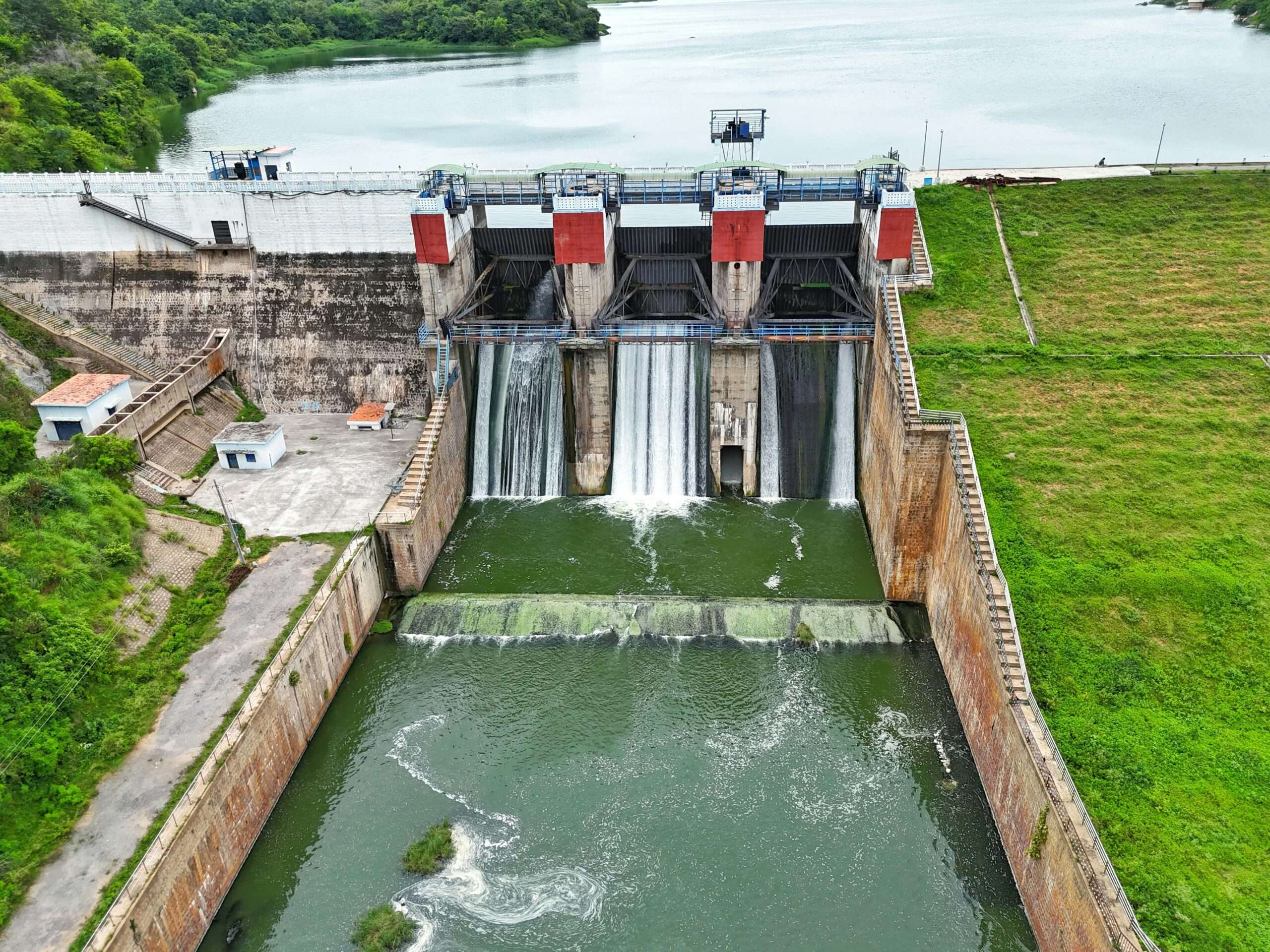
The U.S. Department of Energy’s (DOE) Hydropower and Hydrokinetic Office (H2O) will release nearly $430 million to support the development, expansion and improvement of hydropower facilities.
The Maintaining and Enhancing Hydroelectricity Incentives (MEHI) program directly funds initiatives designed to enhance grid resiliency, dam safety and help facilities comply with contemporary state and federal regulatory requirements. The office estimates that, alongside private investments, will have a roughly $2.8 billion economic impact.
The agency recently announced that it has resumed negotiations to distribute funding to the qualifying recipients. In total, the MEHI investment will support 293 projects across 212 facilities, revitalizing aging infrastructure and securing fast-response grid resiliency and sustainability at an affordable rate for American residents.
Funding will be spread across six regions:
- West – $99.5 million for 38 projects.
- Southeast – $83 million for 47 projects.
- California – $68.6 million for 39 projects.
- New England – $65.5 million for 80 projects.
- Midwest – $63.5 million for 42 projects.
- Mid-Atlantic – $50 million for 47 projects.
Each recipient will receive payments that cover up to 30% of the project cost with a maximum payout of $5 million.
Hydropower generates approximately 5.9% of total utility-scale energy generation and pumped storage hydropower accounts for 88% of all utility-scale energy storage. Due to the low operating costs for these facilities and their ability to quickly ramp up or down to cater to energy demands, hydropower plays a pivotal role in promoting a responsive, resilient power grid.
Supporting the American hydropower fleet aligns with a variety of similar measures designed to supplement and support the national energy grid. In January, the federal administration signed an appropriations bill raising wind and solar program budgets for an additional $250 million. This increase was part of the DOE’s Office of Energy Efficiency and Renewable Energy’s (EERE) total $3.1 billion allocation.
While the final funding amount was overall a decrease from the previous year’s funding, it bumped up the solar budget from $41.9 million to $220 million and the wind budget from $29.8 million to $100 million. The administration reallocated several core funding sources from various programs to supplement higher priority sectors. This includes moving $3.1 billion to help the Office of Nuclear Energy support its Advanced Reactor Deployment Program and $375 million to improve the domestic supply chain for grid components.
Even with the federal government moving away from various green energy and climate change programs, it has continued to invest in renewable energy sources to empower grid resilience and reliability. Among these efforts, the DOE’s Office of Electricity (OE) announced on March 12 that will open a $1.9 billion opportunity to invest in critical electricity infrastructure.
Originally called the Grid Resilience and Innovation Partnerships (GRIP) Program, the DOE renamed it to Speed to Power through Accelerated Reconductoring and other Key Advanced Transmission Technology Upgrades (SPARK). SPARK targets three topic areas:
- Strengthen grid reliability and resilience through reconductoring and deploying Advanced Transmission Technologies (ATTs).
- Develop smart grids by deploying advanced technologies, including new devices, materials, engineering designs or software tools.
- Support high-impact, innovative projects as part of the Grid Innovation Program that will improve grid reliability and resilience.
Applications are due by May 20.
While the administration has placed a renewed focus on fossil fuels and nuclear energy to secure the nation’s energy backbone, other sources will continue to play just as important a role in ensuring the power grid remains operational and resilient. While hydropower does not generate as significant an amount of power as other sources, its affordability and flexibility make it a critical scalable option.
Photo by VISHWANATH from Pexels
For more of the latest from the expansive government marketplace, check Government Market News daily for new stories, insights and profiles from public sector professionals. Check out our national contracting newsletter here.