


President Donald Trump on March 26 signed an executive order requiring federal contractors and subcontractors to certify they do not engage in race- or ethnicity-based diversity, equity and inclusion (DEI) practices, building on the administration’s broader anti-DEI campaign into the private-sector procurement pipeline.
The executive order, titled “Addressing DEI Discrimination by Federal Contractors,” directs all executive departments and agencies covered by the Federal Property and Administrative Services Act (FPASA) to insert a mandatory clause into contracts within 30 days of the order’s signing.
The clause requires contractors to agree they will not engage in what the order defines as “racially discriminatory DEI activities.” It also requires contractors to submit books, records and accounts to their contracting agency for compliance verification.
The order defines “discriminatory” activities as different treatment based on race or ethnicity in recruitment, employment, contracting, program participation or the allocation of a company’s resources. It specifically defines program participation as training, mentoring, leadership development programs, educational opportunities, clubs, associations and similar activities sponsored by the contractor or subcontractor.
The new order builds on Executive Order 14173, “Ending Illegal Discrimination and Restoring Merit-Based Opportunity,” which President Trump signed on Jan. 21, 2025. That order rescinded a 1965 executive order requiring all federal contractors to maintain affirmative action programs. Executive Order 14173 did not define “unlawful DEI,” however, which prompted questions from legal analysts.
The March 2026 order narrows that ambiguity by providing an express definition tied specifically to race- and ethnicity-based differing treatment.
The March order goes beyond Executive Order 14173 in several respects. It extends obligations to subcontractors, introduces contract-level penalties such as termination and debarment and ties compliance directly to the government’s payment decisions under the False Claims Act (FCA). This potentially exposes noncompliant firms to treble damages.
The order does not establish a centralized enforcement body, however. Instead, it assigns compliance responsibilities across multiple federal entities, with contracting agencies serving as the front line.
Specifically, the order directs the following:
- Contracting agencies may cancel, terminate or suspend contracts and launch suspension or debarment proceedings against firms that fail to comply.
- The Office of Management and Budget must issue compliance guidance and work with the attorney general, the assistant to the president for domestic policy and the Equal Employment Opportunity Commission chairman to identify economic sectors the administration views as higher risk for prohibited DEI activities.
- Agency heads must review their implementation within 120 days and conduct regular compliance reviews moving forward.
- The attorney general is directed to consider bringing FCA actions against violating contractors.
- The attorney general must also ensure prompt review of qui tam lawsuits, which are cases brought by private whistleblowers, including making an intervention decision within the statutory 60-day window whenever practicable.
Beyond enforcement, contractors and subcontractors also face a relatively narrow window for compliance. Agencies must begin inserting the mandatory clause into contracts within 30 days, though interim guidance from the Federal Acquisition Regulatory Council is not expected for 60 days. That timeline difference may require contracting officers to work through early implementation details ahead of a formal regulatory framework.
The order’s scope is also worth noting. Its prohibition is focused on race- and ethnicity-based disparate treatment and does not expressly address DEI activities related to gender, disability, veteran status or other protected characteristics. And because the order draws its authority from FPASA, which governs most civilian agency procurement, certain agreement types may fall outside its reach, including Other Transaction Agreements, cooperative agreements and grants.
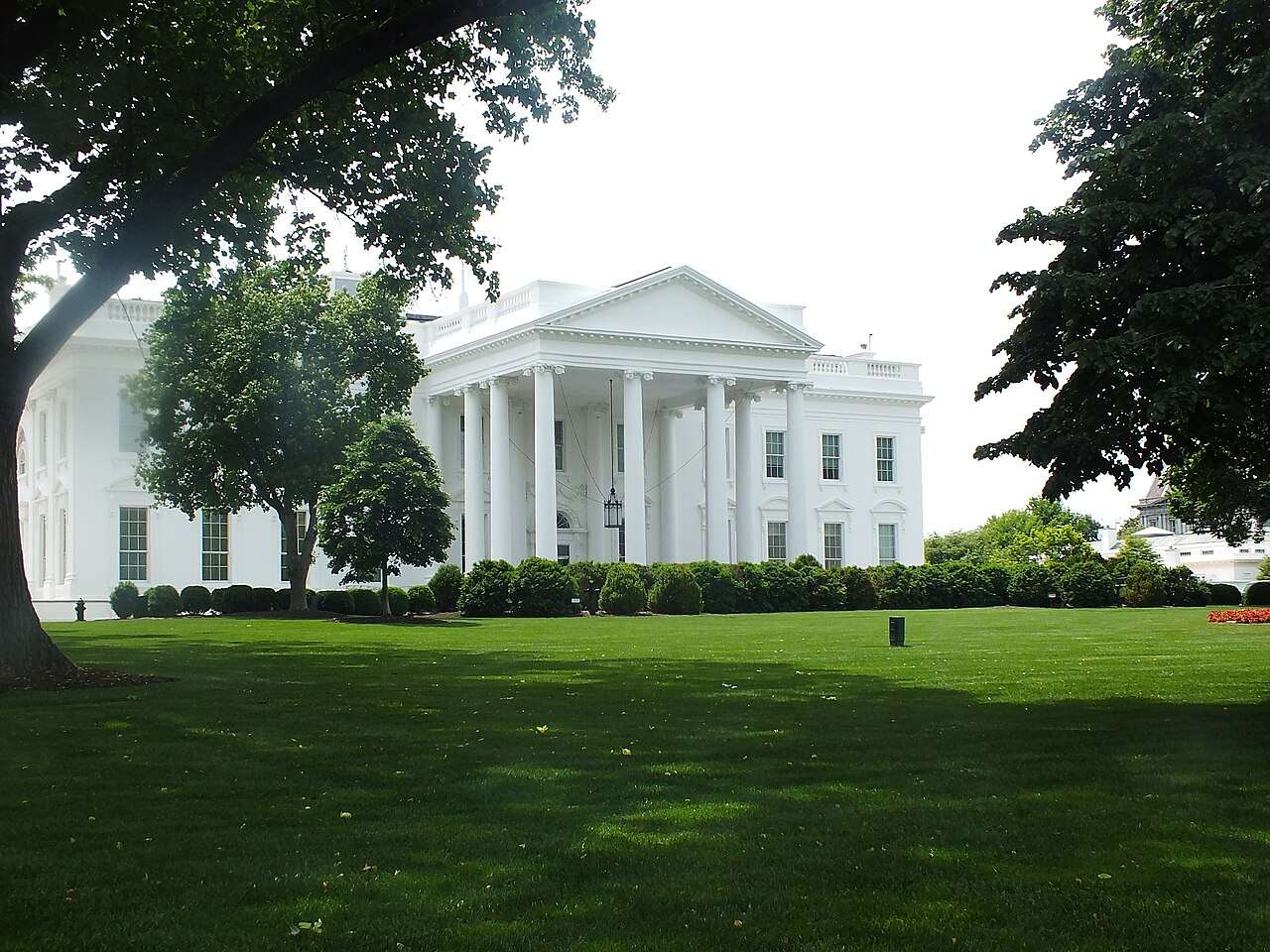
Photo by AramilFeraxa, CC BY 4.0 https://creativecommons.org/licenses/by/4.0, from Wikimedia Commons
For more of the latest from the expansive government marketplace, check Government Market News daily for new stories, insights and profiles from public sector professionals. Check out our national contracting newsletter here.