


The Utah Department of Transportation (UDOT) announced its route preference for the Heber Valley bypass earlier this month. The project, meant to ease traffic congestion in downtown Heber City, has been in some form of deliberation for over 20 years.
According to officials, the project is meant to keep traffic from U.S. 40 off Main Street in downtown Heber City. Current projections shared by UDOT show traffic times more than doubling by 2050 if no action is taken.
According to the environmental impact statement released by UDOT, the department prefers Alternative B for the bypass, rather than the proposed Alternative A. Alternative B would route a new highway west of the city, starting where Potter Lane meets U.S. 40.
From there, the road would cut through the North Fields before reconnecting with U.S. 40 and U.S. 189 south of downtown. Alternative A would have kept travelers on the existing U.S. 40 corridor through this stretch.
The project is now estimated to cost $760.5 million, about $49 million more than Alternative A. That figure marks a significant jump from UDOT’s March 2025 estimate of $584 million for Alternative B. The agency has not publicly detailed what drove the roughly $176 million increase.
Under the preferred plan, drivers would access the new corridor at Potter Lane, State Route 113 and south of the U.S. 40/U.S. 189 junction near Charleston. UDOT plans to build the route as a free-flow facility with ramps and overpasses rather than traffic signals.
The agency says the bypass will remain a limited-access highway, meaning no additional interchanges or on-ramps beyond what appears in the current plan. Officials have pointed to this restriction as a way to discourage sprawl in the North Fields, an area of wetlands and farmland that has drawn conservation concerns throughout the planning process.
The project also calls for frontage roads along north U.S. 40 and a 12-foot paved trail for cyclists and pedestrians running along the east side of the corridor.
The route selection comes with tradeoffs. Alternative B would affect roughly 54 acres of wetlands compared to about 23 acres under Alternative A. However, it would displace fewer property owners, requiring 6 residential and 2 business relocations versus 12 residential and 15 business relocations for the on-highway option.
UDOT has committed to wetland mitigation at a minimum 2-to-1 ratio and says it will prioritize establishing mitigation sites within the North Fields, which could limit future development in the area.
UDOT opened a 60-day public comment period that runs through March 9. After reviewing public input, UDOT expects to release its final environmental impact statement and record of decision by summer 2026.
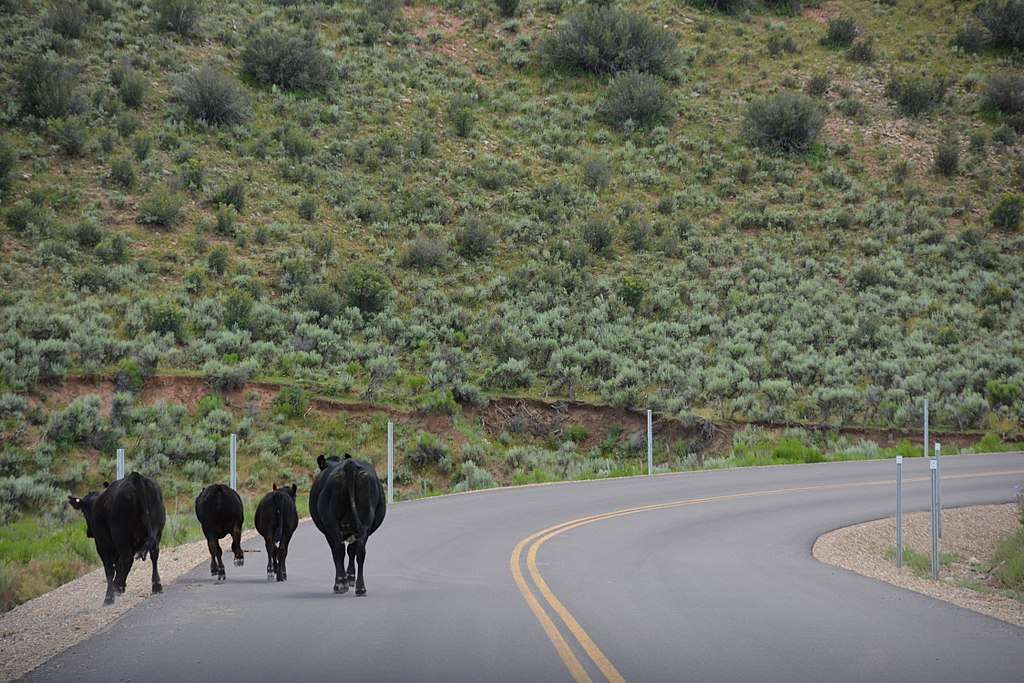
Photo by Bureau of Land Management, Public domain, from Wikimedia Commons
For more of the latest from the expansive government marketplace, check Government Market News daily for new stories, insights and profiles from public sector professionals. Check out our national contracting newsletter here.