

The Department of Energy (DOE) has released a $171.5 million Notice of Funding Opportunity (NOFO) to expand next-generation field tests and exploration drilling for future geothermal systems. Applications are due by April 30.
The funding opportunity will cover six topic areas, though the first round of the opportunity will only cover two of those. For the initial round, the DOE is only interested in applications that address field tests for enhanced geothermal systems (EGS) and drilling for next-generation and hydrothermal resource characterization and confirmation.
Eligible applicants include:
- Higher education institutions.
- For- and nonprofit entities.
- State and local government entities.
- Indian Tribes.
- NonDOE/NNSA FFRDCs as subrecipients.
- Federal agencies and instrumentalities as subrecipients.
- Foreign entities accompanied by an explicit written waiver request.
The DOE will award up to $100 million for projects approved for the first topic area: EGS Field Tests. The department anticipates distributing between four and 10 awards. Each award may range between $10 million and $25 million with a minimum 20% cost share. These projects will conduct field tests at sites with potential for eventual electric power generation using EGS solutions.
The remaining $71.5 million will be provided for the second topic area: Drilling for Next-Generation and Hydrothermal Resource Exploration, Characterization and Confirmation. The DOE plans to deliver between eight and 18 awards in total. Each award may range between $4 million and $8 million with a minimum 20% cost share. These projects will drill reservoir depth resource exploration, characterization and confirmation wells to gather data for hydrothermal development.
Projects will compile data on next-generation and conventional hydrothermal resource development for potential electrical power generation. Currently, EGS are the most advanced and mature of available next-generation geothermal technologies, offering the most value and demonstrate the highest potential for feasible deployment and implementation. The DOE anticipates that these solutions may generate at least 300 gigawatts (gw) of power for the U.S. grid by 2050.
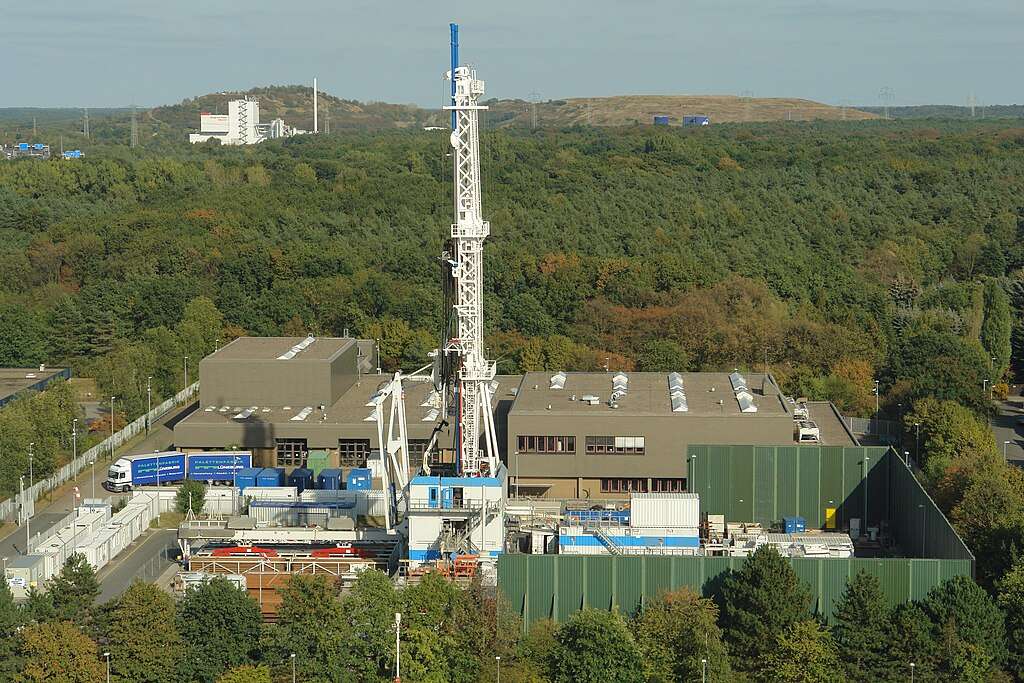
Photo by T. AGEMAR, CC BY 4.0 https://creativecommons.org/licenses/by/4.0, from Wikimedia Commons
For more of the latest from the expansive government marketplace, check Government Market News daily for new stories, insights and profiles from public sector professionals. Check out our national contracting newsletter here.