


The San Diego Association of Governments (SANDAG) has released its final version of the 2025 Regional Plan for public comment, outlining a $125.2 billion investment in critical multimodal transportation infrastructure over the next 25 years. The Board of Directors will vote on adopting the plan during its Dec. 12 meeting.
As the regional population continues to scale, SANDAG has recognized the need to establish a series of goals aligning with the state’s transportation policies while promoting equitable solutions with measurable benefits for riders and transit systems. The plan includes a series of objectives guiding implementation, including:
- Reducing travel times and improving accessibility through multimodal transportation system investments.
- Expanding transit connections to promote work and education opportunities.
- Reducing greenhouse gas (GHG) emissions by providing lower-emission travel mode options.
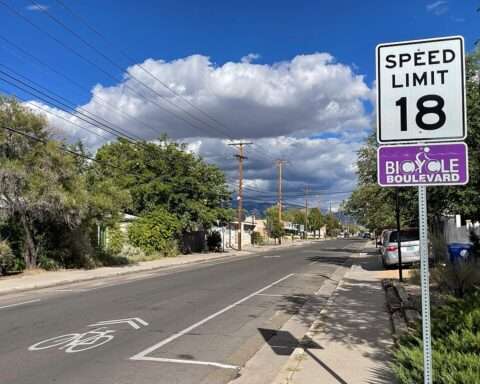
- Building shared-use infrastructure to protect pedestrians and bicyclists.
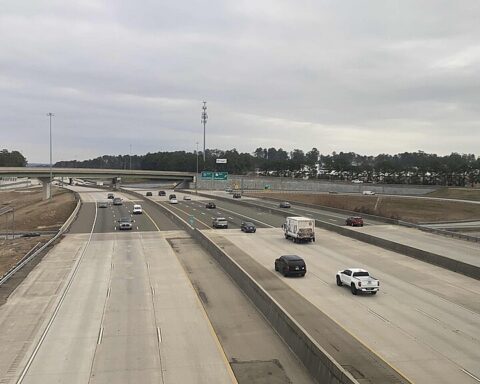
SANDAG highlighted a selection of near- and long-term projects taking the highest priority for phased execution over a 25-year period. Implementation of the Regional Transportation Improvement Program (RTIP) – which covers a 5-year project and program list laying the foundation for a decades-long vision – is the most important component of the plan. Among the major projects featured in the document, the agency will build 11 miles of express lanes on Interstate 805, add 28 miles of bikeway infrastructure to the transit network and integrate auxiliary lanes along three major state routes.
In addition, the agency will continue improving the Los Angeles-San Diego-San Luis Obispo (LOSSAN) Corridor by addressing coastal resiliency, replacing aging infrastructure and installing double-track to enhance performance. As part of the plan’s long-term vision, SANDAG will expand the network to include 59 new routes and upgrade existing roadways to increase transit frequency, expand rural transit accessibility and establish a complete network of managed lanes to alleviate congestion.
The breakdown of expenditures across all categories featured in the plan are as follows:
- Transit infrastructure will receive $72.7 billion to install of guideway and track elements, stations, stops, terminals, intermodals, support and maintenance facilities, yards, shops, administration buildings and sitework.
- Complete Corridors will spend $25.3 billion to establish managed lanes, connectors, direct access ramps, interchange and arterial operational improvements, transportation technology, rural corridor improvements, community reconnections, and highway operations.
- Local projects will use $14.5 billion to build and maintain local streets and roads.
- Active transportation will spend $5.5 billion to enhance connectivity, prioritizing existing bikeways, bikeway connectors and multimodal corridors.
- The authority will spend $3.6 billion to support various policies and programs, including Vision Zero, climate resilience, housing and land use, habitat conservation and program administration.
- The authority will spend $2.6 billion to service debt.
- $801 million will go toward establishing flexible fleets, focusing on microtransit solutions including micromobility, ridehail, rideshare, carshare and neighborhood electric vehicles among others.
- Transportation system management will cost $237 million to develop data hubs and applications to support operations.
Photo by Lucas Fonseca from Pexels
This story is a part of the weekly Government Contracting Pipeline digital news publication. See more of the latest government contracting news here. For more national government news, check Government Market News daily for new stories, insights and profiles from public sector professionals.