

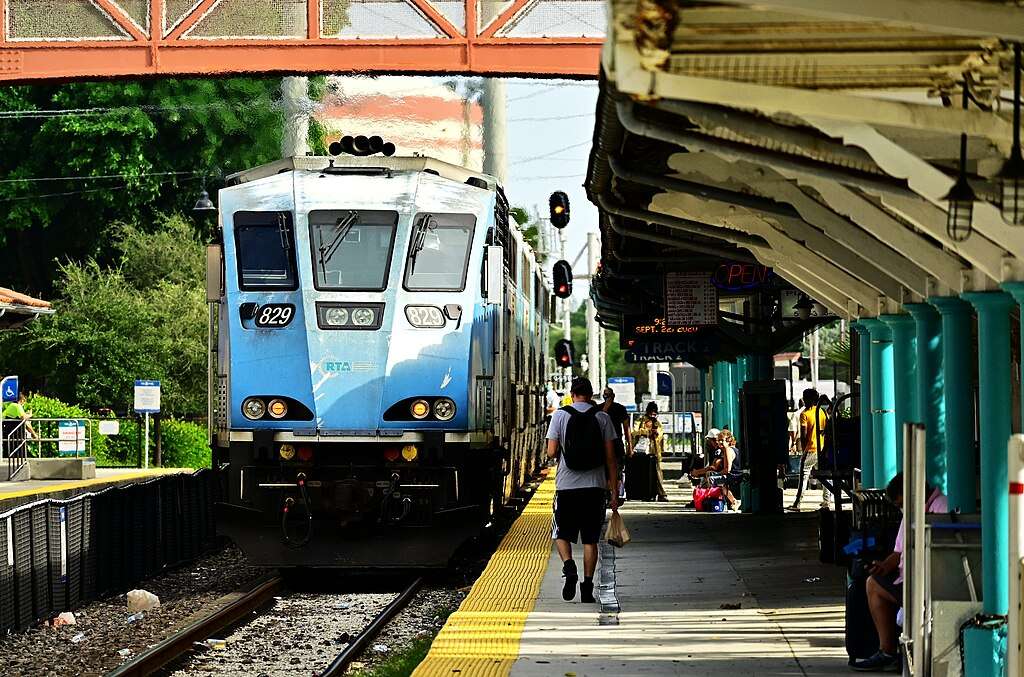
Officials in Miami-Dade County provided an update earlier this month on a $927.3 million project seeking to connect several local communities with passenger rail. The project, which secured funding approval in 2025, is advancing through design and engineering phases.
The Miami-Dade County Commission in September 2025 approved the funding plans for the Northeast Rapid Transit Corridor that will connect Aventura, North Miami Beach, Miami Shores, El Portal, Wynwood, the Design District and Little Haiti all to Downtown Miami.
The 13.5-mile commuter rail route is expected to use the Florida East Coast Railway, using existing Brightline Miami Central and West Aventura stations and building five new stations in Wynwood, the Design District, Little Haiti and at Florida International University’s north campus in North Miami Beach, where that city plans to build workforce and student housing near the future train stop at Northeast 151st Street.
Miami-Dade County has not specified when construction crews will break ground on the project. The most recent timeline released in January shows that the 60% design submittal is due in May 2026, with 100% plans projected for submittal in April 2027.
The line is expected to be fully operational by 2032, according to county officials.
More than half of the project is being federally funded, with the state, county and cities also contributing.
The Federal Transit Administration (FTA) has pledged up to $389.5 million through its New Starts / Capital Investment Grants (CIG) program, covering roughly 42% of the project’s cost. The State of Florida has committed $200 million toward the project, while the remainder is to be covered by local sources, including the county’s People’s Transportation Plan (PTP). With the county’s approval, the project is now positioned to enter the engineering phase — a stage involving final design, procurement, and preparation for construction.
The corridor is a key component of Miami-Dade’s broader SMART (Strategic Miami Area Rapid Transit) program, which envisions multiple rapid transit lines to improve mobility throughout the county.
Project leaders say the new rail will cut auto traffic by nearly 8,000 trips each weekday.
Once complete, the commuter rail service will run every 30 minutes during peak times and 60 minutes off-peak and on weekends.
Photo by Nelson Axigoth (dba Nelson Photography), CC BY-SA 4.0 https://creativecommons.org/licenses/by-sa/4.0, from Wikimedia Commons
For more of the latest from the expansive government marketplace, check Government Market News daily for new stories, insights and profiles from public sector professionals. Check out our national contracting newsletter here.