

The U.S. Department of Energy (DOE) last week announced more than $320 million in new investments to accelerate artificial intelligence (AI) tools for scientific research, marking one of the largest federal pushes to integrate AI with the nation’s scientific infrastructure. The funding is part of the administration’s Genesis Mission, a broader initiative focused on updating how scientific research is conducted using AI and advanced computing.
Launched by executive order on Nov. 24, the Genesis Mission directs the DOE and its 17 national laboratories to build a shared research platform that brings together supercomputers, experimental facilities, AI systems and large scientific datasets. The initiative is designed to speed up discovery and strengthen research across fields such as energy, materials science and national security, with a stated target of doubling the productivity and impact of U.S. science and engineering over the next decade.
This latest funding will support four major components of the initiative: the American Science Cloud (AmSC), the transformational AI Models Consortium (ModCon), robotics and automation and foundational AI awards. Together, the investments expand computing access, support the development of AI models tailored for scientific work and introduce more automation into laboratory research.
The AmSC is the Genesis Mission’s central infrastructure, providing shared high-performance computing, data storage, scientific data and AI models to researchers at national laboratories, universities and private institutions. DOE officials say expanding access to these resources will allow more researchers to apply advanced data analysis across a wider range of scientific fields.
ModCon focuses on developing advanced AI models that can handle diverse scientific challenges, including material design, quantum system simulation and complex engineering problems. These models will be shared across participating institutions to support a wide array of research efforts.
The DOE has also selected 14 robotics and automation projects to integrate intelligent systems into laboratory workflows for faster experiments with less manual intervention. A separate set of 37 foundational AI awards will fund data curation and modeling projects that organize scientific data and improve the reliability and performance of AI tools used to analyze large datasets.
Top funded projects announced in December include:
- $87 million for AI investments.
- $78.8 Million for Scientific Discovery through Advanced Computing (SciDAC) Institutes.
- $47.6 Million for scientific discovery through advanced computing in basic energy sciences using supercomputers.
- $40 Million for American Science Cloud.
- $30 Million for Transformational AI Models Consortium.
- $30 Million for research to accelerate scientific advances at user facilities.
While these awards have been made, additional funding opportunities connected to the Genesis Mission’s long-term build-out may be released in the months ahead. The executive order outlines several near-term milestones, including identifying national science challenges suited for AI, cataloging available federal computing resources and defining initial datasets and models for use in the platform.
The timeline also calls for a review of robotic and autonomous laboratory capabilities within eight months, followed by a demonstration of an initial working system tied to at least one national research challenge.
Separately, the DOE’s National Nuclear Security Administration (NNSA) has begun advancing related efforts by issuing a request for information seeking industry and academic input on AI capabilities for national security applications. Responses are due by Jan. 23, 2026, signaling continued federal momentum around AI-driven science and research infrastructure.
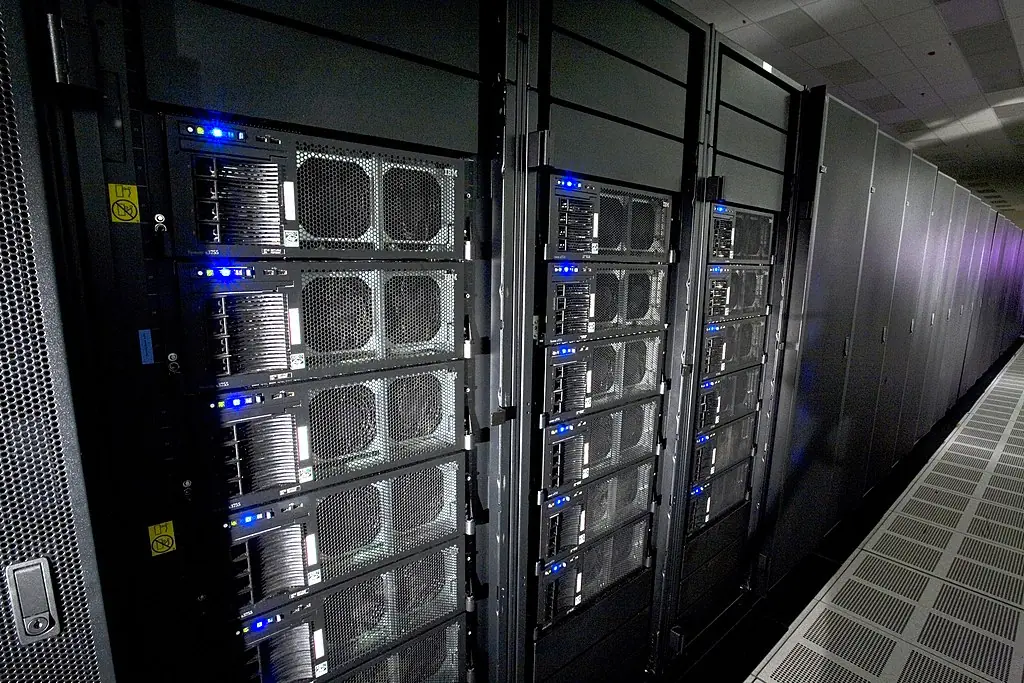
Photo by LeRoy N. Sanchez, Records Management/Media Services and Operations, Attribution, from Wikimedia Commons
This story is a part of the weekly Government Contracting Pipeline digital news publication. See more of the latest government contracting news here. For more national government news, check Government Market News daily for new stories, insights and profiles from public sector professionals.