


The Department of Energy (DOE) has launched the Genesis Mission Consortium, a public-private partnership (P3) dedicated to advancing the federal artificial intelligence (AI) platform merging government data with research across all corners of the country.
The Genesis Mission is a historic initiative designed to leverage the nation’s best resources from the government, national labs, industry and academia in tandem with AI tools to usher in a new age of scientific and technological innovation. The consortium will be pivotal in the mission’s efforts to explore emerging technologies as a collaborative hub for all participating members, contributing to success in critical industries and stronger national security.
The mission’s core purpose is to connect participants with the world’s best technological resources. These include supercomputers, AI systems and next-generation quantum systems with the most advanced scientific instruments int he nation. The DOE recently announced a total of 26 science and technology challenges recognized as critically important to the Genesis Mission’s agenda and national significance.
Some of the significant challenges for Genesis Mission partners include:
- Reenvisioning Advanced Manufacturing and Industrial Productivity.
- Reimagining Construction and Operation of Buildings.
- Delivering Nuclear Energy that is Faster, Safer, Cheaper.
- Accelerating Delivery of Fusion Energy.
- Recentering Microelectronics in America.
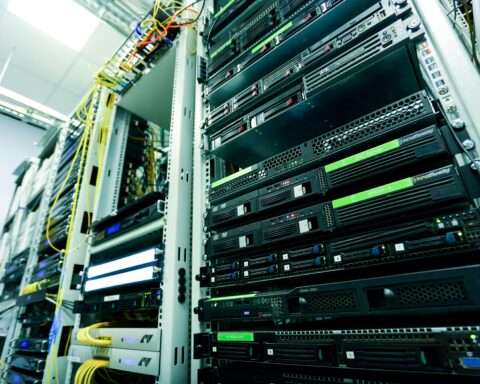
- Securing U.S. Leadership in Data Centers.
- Achieving AI-Driven Autonomous Laboratories.
- Predicting U.S. Water for Energy.
- Scaling the Grid to Power the American Economy.
- Unleashing Subsurface Strategic Energy Assets.
- Increasing Experimental Capacity at Nuclear Research Facilities.
- Streamlining Production, Removing Red Tape, and Ensuring Safety in the Nuclear Enterprise.
A list of all published challenges can be found on the DOE’s website. Federal officials will also provide additional information and updates on the Genesis Mission through DOE platforms.
The mission will utilize emerging AI technologies to solve these challenges, bridging the gap between scientific research and commercial deployment. A few examples of tangible results achieved as part of the Genesis Mission will include increasing the reliability and efficacy of automation process, improving power grid operations, digitizing decades of research, streamlining discovery of new drugs and advanced materials, achieving breakthroughs in energy and chemistry and unlocking the next generation of microelectronic technology.
Comprised of participants from the DOE’s 17 national laboratories, universities and businesses, the consortium will operate as a coordinated access point for members and their resources. Critically, the consortium will identify high-value, strategic partnerships between members and non-members to capitalize on available resources from all sectors. The consortium will also amplify the DOE’s reach by promoting solicitations, forming agreements and tracking project successes.
The consortium’s primary function will be to develop member-driven working groups dedicated to merging data flows and innovative applications to drive AI advancement. These groups will consist of teams dedicated to AI model development and validation, data integration and standards, high-performance computing and cloud infrastructure and robotics and automation.
With the consortium formed, the Genesis Mission’s goal to double the productivity and impact of American research over the next 10 years is more feasible than ever. Teams developing new technologies and discoveries will be able to use the platform to deliver these solutions to essential scientific and industrial sectors, including advanced manufacturing, biotechnology, materials science, nuclear energy, quantum information science and semiconductors.
Photo by Colossus Cloud from Pixabay
For more of the latest from the expansive government marketplace, check Government Market News daily for new stories, insights and profiles from public sector professionals. Check out our national contracting newsletter here.